
Views: 247 Author: iHot Cosmetics Publish Time: 2026-08-28 Origin: Site


Content Menu
● Traditional Korean Skincare Routine: Why Layering Still Matters
>> What consumers value in a Korean-inspired routine
>> The commercial challenge of too many steps
● Modern Minimalist Private Label Skincare Sets: The "Less but Better" Model
>> Why minimalist skincare sets are attractive to private label brands
● Traditional Korean Routine vs Minimalist Skincare Sets
● The iHot Cosmetics Product Development Perspective
>> For Korean-inspired private label collections
>> For minimalist private label skincare sets
● Safety, Claims, and Manufacturing: The Details That Protect Brand Trust
>> Our practical quality-control checklist
● How to Choose the Right Set for Your Brand
>> 2. What is the one promise your set owns?
>> 3. Can the formula story survive scrutiny?
● Expert Recommendation: Build a Core Routine, Then Add Ritual
● Build Your Private Label Skincare Set With iHot Cosmetics
● FAQ
>> Is a traditional Korean skincare routine better than a minimalist skincare routine?
>> How many products should a private label skincare set include?
>> Can a minimalist skincare set still deliver a premium experience?
>> What is the best private label skincare set for sensitive-feeling skin?
>> Should I create a Korean-inspired skincare line or a minimalist skincare line?
>> What should I ask an OEM/ODM skincare manufacturer before starting?
At iHot Cosmetics (Guangzhou Aihuo Biotechnology Co., Ltd.), we help beauty brands turn skincare trends into manufacturing-ready, market-ready product systems. In the discussion of Traditional Korean Skincare Routine vs Modern Minimalist Private Label Skincare Sets, the right answer is not simply "more steps" or "fewer steps." It is about building a routine that delivers a clear consumer benefit, a credible formula story, dependable quality, and a buying experience simple enough to understand and repeat.
As a GMP-certified manufacturer with more than 10 years of experience in skincare, personal care, and hair care solutions, iHot Cosmetics provides end-to-end OEM/ODM support for global brands. Our 70,000-square-meter ISO-certified facility, 15 automated production lines, and Class 100,000 cleanroom environment support scalable development for brands that need both product creativity and controlled manufacturing. Trusted by more than 2,000 brands, we see the market from both sides: the consumer who wants healthy-looking skin and the brand owner who needs a differentiated, compliant, commercially viable private label skincare set.
Traditional Korean skincare remains influential because it made consumers appreciate gentle cleansing, hydration, layering, and daily consistency. At the same time, modern minimalist skincare is growing because many shoppers want fewer products, clearer routines, lower friction, and more targeted results. The opportunity for private label brands is to combine the emotional appeal of K-beauty-inspired rituals with the efficiency of a modern three- or four-step system.
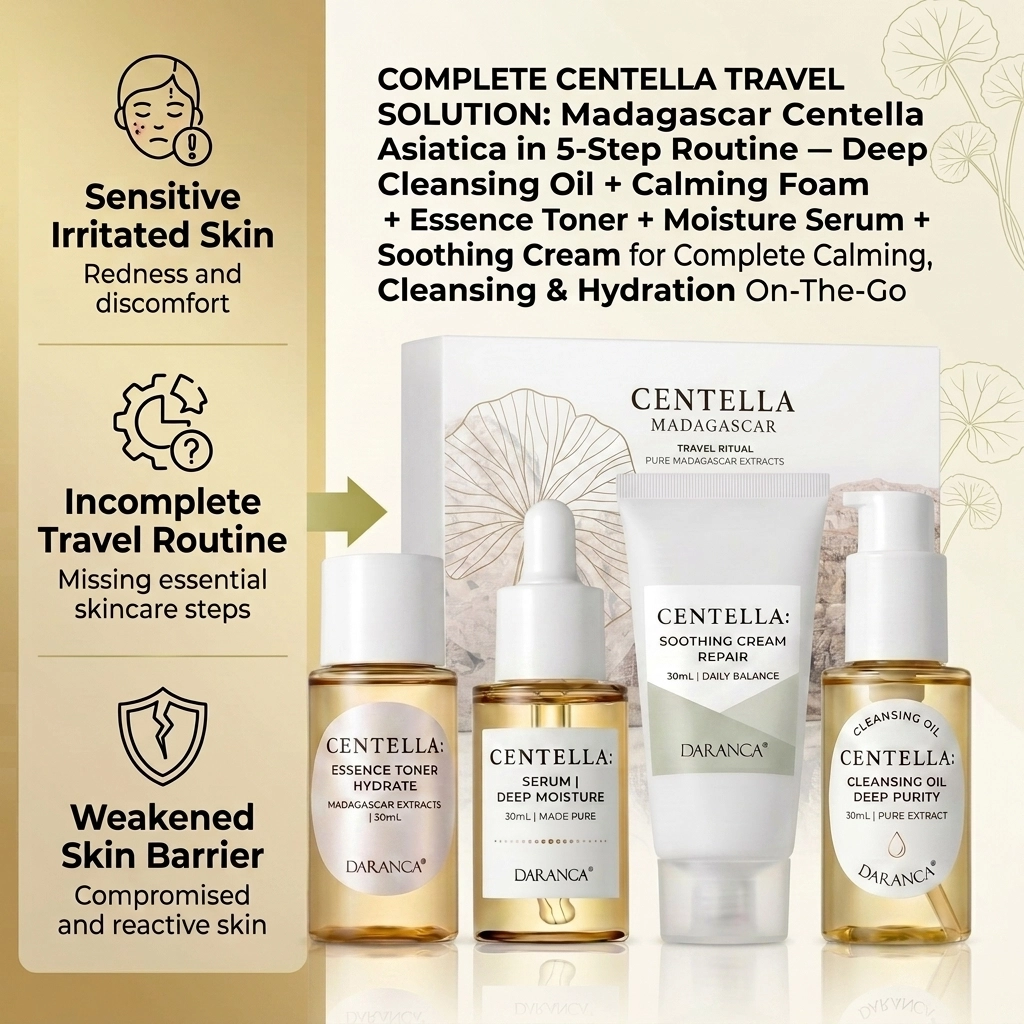
A traditional Korean skincare routine is commonly associated with multiple lightweight layers. The familiar format can include an oil cleanser, water-based cleanser, toner, essence, serum or ampoule, moisturizer, sunscreen, and optional treatments such as exfoliants, eye creams, or sheet masks.
The philosophy is not just about product count. It is based on a sequence: cleanse gently, add water-based hydration, apply targeted treatment, seal in moisture, and protect skin during the day. This approach has helped popularize concepts such as skin barrier care, dewy skin, lightweight textures, and "glass skin" aesthetics. A typical K-beauty routine prioritizes hydration and gradual layering rather than relying on one heavy, multi-purpose cream.
From our experience working with global beauty brands, shoppers are often drawn to Korean skincare because the routine feels educational, sensory, and customizable. Every product has a perceived role, which can create a stronger ritual and a higher level of product engagement.
Key strengths include:
- A premium ritual experience through multiple textures, such as gel cleansers, watery toners, essences, ampoules, and creams.
- High customization potential because consumers can select different serums, masks, or treatments for different skin concerns.
- Strong storytelling opportunities around hydration, glow, soothing care, fermented ingredients, botanical extracts, and skin barrier support.
- Higher cross-selling potential because each step can become an individual SKU or part of a complete regimen.
- Visually engaging social content, especially when textures, application sequences, and visible "before-and-after routine" narratives are easy to demonstrate.
For brands, a Korean-inspired private label skincare line can work especially well when the target customer enjoys self-care rituals, follows skincare content, or wants an elevated at-home beauty experience.
A long skincare routine can also create barriers. Consumers may feel uncertain about application order, ingredient compatibility, or how frequently to use certain treatments. More products can mean more decisions, more packaging, more inventory complexity, and a greater chance that the customer stops using the routine before repurchasing.
The key issue is not that multi-step routines are inherently wrong. The issue is whether every step earns its place.
For example, a brand may launch an eight-piece skincare kit with cleanser, toner, essence, serum, eye cream, moisturizer, exfoliating pads, and mask. If consumers cannot explain why they need each product, the set can feel excessive rather than luxurious. In contrast, a carefully designed four-piece Korean-inspired set may preserve the hydration ritual while making the experience much easier to adopt.
Modern minimalist skincare, often called "skinimalism," focuses on fewer products with clearly defined functions. A typical minimalist skincare set may include a gentle cleanser, a targeted serum, a moisturizer, and an SPF product for daytime use.
This model does not mean sacrificing performance. It means reducing unnecessary repetition. Instead of selling several products that all promise hydration, a well-designed minimalist private label skincare set can combine compatible ingredients and concentrate on the core routine consumers are most likely to follow consistently.
The most practical minimalist framework is:
1. Cleanse without stripping the skin.
2. Treat one primary concern with a focused serum.
3. Moisturize to support comfort and barrier function.
4. Protect with daily sunscreen when applicable.
A growing number of consumers are looking for products that make skincare easier to understand and easier to maintain. Industry analysis also shows that beauty discovery and purchasing are increasingly connected to creator-led content, social commerce, and digital marketplaces. In that environment, skincare sets with a simple, visible purpose can be easier to communicate and convert. [mckinsey]
For emerging brands, minimalist sets can offer a focused entry strategy. Rather than launching ten individual SKUs at once, a brand can introduce a hero routine that clearly explains who it is for, what it does, and how to use it.
A minimalist private label skincare set can provide:
- A faster customer decision path because the routine is easy to understand.
- Simpler education for product pages, packaging, social videos, and retail staff.
- Stronger repeat-purchase potential when the products become daily essentials.
- More efficient inventory planning than a broad collection with many niche SKUs.
- Lower consumer confusion around layering, frequency, and active-ingredient overlap.
- More sustainable positioning opportunities through fewer components, concentrated formulas, refill concepts, or reduced secondary packaging.
Minimalism works particularly well for busy professionals, skincare beginners, sensitive-skin consumers, male grooming audiences, travelers, and shoppers who want effective daily care without a complicated routine.
The best product strategy depends on the consumer, price positioning, brand story, retail channel, and manufacturing plan. A brand does not need to choose one extreme.
| Decision Factor | Traditional Korean Skincare Routine | Modern Minimalist Private Label Skincare Set |
|---|---|---|
| Consumer promise | A sensorial, customizable self-care ritual | A simple, focused, repeatable daily routine |
| Typical product count | Six to ten or more steps | Three to five core products |
| Brand storytelling | Texture, ritual, hydration layering, discovery | Clarity, efficiency, skin barrier support, targeted care |
| Best for | Skincare enthusiasts and beauty-content audiences | Busy consumers, beginners, sensitive-skin audiences |
| Inventory complexity | Higher due to more SKUs and formats | Lower with a core set and optional add-ons |
| Education needs | Higher; usage order and frequency need explanation | Lower; simple step-by-step directions |
| Social-media potential | Strong for routines, unboxing, layering, and texture videos | Strong for short tutorials, problem-solution content, and quick routines |
| Upselling opportunity | High through masks, ampoules, eye care, and seasonal treatments | High through targeted boosters, travel sizes, and routine extensions |
| Main risk | Consumer fatigue and unnecessary product overlap | Products may feel too basic if the brand lacks a distinctive formula story |
The strongest brands often use a hybrid strategy: a minimalist core routine supported by optional Korean-inspired ritual products. For example, a brand can launch a three-step daily barrier-care set, then add a soothing essence, overnight mask, or weekly exfoliating treatment as optional upgrades.
At iHot Cosmetics, we believe that the right skincare routine begins with product architecture, not trend copying. We work with brand founders, distributors, e-commerce sellers, salons, and retail buyers to define a product system that matches consumer behavior and commercial goals.
We recommend building around lightweight, compatible textures and a clear application order. A practical launch may include:
- Low-pH gel cleanser or cream cleanser.
- Hydrating toner or toner mist.
- Essence with a lightweight, fast-absorbing profile.
- Targeted serum or ampoule.
- Barrier-support moisturizer.
- Optional sleeping mask or sheet mask for weekly ritual use.
The goal is not to copy a "10-step" format simply because it is recognizable. The goal is to create a coherent sensory system. Each product should have a distinct job, texture, and usage moment.
We recommend beginning with a focused concern and building a compact routine around it. Common concepts include:
- Barrier repair skincare set: Gentle cleanser, soothing serum, ceramide-style moisturizer, and optional mask.
- Hydration and glow skincare set: Mild cleanser, hydrating serum, lightweight cream, and overnight sleeping mask.
- Oily and blemish-prone skincare set: Balancing cleanser, clarifying serum, oil-control moisturizer, and calming spot-care option.
- Brightening skincare set: Gentle cleanser, antioxidant or brightening serum, moisturizer, and daily sun-care product where the regulatory pathway and market requirements are properly addressed.
- Men's simple skincare set: Facial cleanser, all-purpose hydrating serum, lightweight moisturizer, and beard or scalp-care extension product.
Our role is to help brands translate a concept into a formula, packaging, testing plan, production workflow, and practical market story.
A visually attractive skincare set is not enough. Long-term brand growth requires quality control, safety substantiation, responsible claims, and clear labeling.
For brands targeting the U.S. market, cosmetics generally do not require FDA premarket approval, except for color additives. However, companies remain responsible for ensuring that products are safe under labeled or customary conditions of use and are properly labeled. Cosmetics must not be adulterated or misbranded.
That distinction matters. A private label skincare brand should not make drug-like claims unless its product and regulatory pathway support them. For example, a cosmetic can describe benefits such as "helps moisturize," "improves the appearance of dull-looking skin," or "leaves skin feeling smoother." Claims such as "treats acne," "cures eczema," or "repairs damaged skin cells" may change how a product is regulated.
Before moving into large-scale production, iHot Cosmetics recommends that brand teams confirm the following:
1. Formula purpose: Define the primary consumer benefit for each SKU.
2. Ingredient compatibility: Avoid designing a routine that layers unnecessary or conflicting active ingredients.
3. Stability and compatibility: Assess formula behavior over time and compatibility with chosen packaging.
4. Microbiological control: Build controls that support safe production and product quality.
5. Safety substantiation: Maintain adequate evidence and records supporting product safety.
6. Claims review: Ensure product claims remain truthful, supportable, and suitable for the intended market.
7. Label review: Confirm required product identity, ingredient information, net contents, responsible-party details, warnings where needed, and market-specific requirements.
8. User instructions: Provide clear directions on order of application, frequency, and precautions.
FDA guidance emphasizes that companies manufacturing or marketing cosmetics are responsible for product safety and appropriate labeling, and that safety substantiation should be supported by scientifically robust information.
Use this three-question framework before selecting a routine format.
A 20-year-old skincare enthusiast who follows beauty creators may enjoy an essence, ampoule, and overnight mask. A working parent may prefer a cleanser, serum, moisturizer, and sunscreen routine that takes less than three minutes.
Do not build your private label skincare set around what looks impressive on a product shelf. Build it around the routine your target buyer can realistically maintain.
A strong set should answer one simple question: "Why should I use this routine?"
Examples:
- "A daily hydration routine for dehydrated, dull-looking skin."
- "A simple barrier-comfort routine for sensitive-feeling skin."
- "A lightweight glow routine inspired by Korean hydration layering."
- "A three-step skincare set for busy men who want uncomplicated daily care."
The narrower and clearer the promise, the easier it is to create product pages, creator content, packaging copy, and retail displays.
Consumers increasingly evaluate ingredient lists, online reviews, product demonstrations, and brand transparency. McKinsey notes that beauty shoppers are becoming more informed about ingredients and efficacy claims, while digital channels continue to shape how people discover and buy beauty products.
Your formula story should therefore be specific. Instead of saying "luxury skincare for everyone," explain the format, texture, usage occasion, target concern, and what makes the product system easy to use.
For most new and growing beauty brands, we recommend starting with a minimalist core private label skincare set and adding Korean-inspired ritual products as optional extensions.
A smart launch could include:
- A gentle daily cleanser.
- A hero serum with one clear benefit.
- A comfortable moisturizer.
- An optional hydrating essence or sleeping mask.
- A complementary seasonal or travel-size kit.
This approach gives consumers an easy entry point while preserving room for discovery, bundling, and premium upgrades. It also gives the brand a cleaner operational path: fewer initial SKUs, clearer marketing, more manageable forecasting, and a stronger opportunity to learn from customer feedback before expanding.
Traditional Korean skincare routines and modern minimalist skincare sets are not opposing philosophies. The first celebrates care, layering, and sensory enjoyment. The second celebrates clarity, efficiency, and consistency. The most competitive private label brands know how to combine both.
Whether you want to develop a Korean-inspired multi-step collection, a modern minimalist skincare set, or a hybrid routine tailored to your market, iHot Cosmetics is ready to support your OEM/ODM journey.
With GMP-certified manufacturing, more than a decade of experience, a 70,000-square-meter ISO-certified facility, 15 automated production lines, and Class 100,000 cleanroom production conditions, we help brands move from product concept to scalable skincare solutions.
Contact iHot Cosmetics to discuss your target market, desired routine format, formula direction, packaging concept, and private label skincare requirements. Together, we can create a skincare set that is easier to understand, stronger to market, and built for long-term customer trust.
Neither format is automatically better. A traditional Korean-inspired routine may suit consumers who enjoy layering and customization, while a minimalist routine may be more practical for consumers who want fewer daily steps. Product quality, skin compatibility, consistent use, and clear instructions matter more than product count.
For a first launch, three to five products is often a practical range. A cleanser, treatment serum, and moisturizer create a simple base. Brands can add an essence, sunscreen, mask, or targeted booster after validating demand.
Yes. Premium positioning can come from formula texture, packaging quality, sensory experience, clinically appropriate product development, ingredient transparency, and a clear brand story. A premium routine does not need to have many steps.
A gentle, fragrance-conscious, barrier-supportive routine is often the most appropriate starting point. Consider a mild cleanser, hydrating serum, comfortable moisturizer, and simple usage instructions. Final formula selection should be based on target-market requirements, ingredient assessment, and appropriate testing.
Choose based on your audience and channel. A Korean-inspired line may be effective for beauty enthusiasts and content-led marketing. A minimalist line may work better for broad audiences that value simplicity, speed, and clear product benefits. A hybrid model often offers the strongest commercial flexibility.
Ask about GMP and quality systems, formulation capability, minimum order quantities, testing support, packaging options, lead times, documentation, ingredient sourcing, claims review, export experience, and the manufacturer's ability to scale with your brand.
1. U.S. Food and Drug Administration, "[Small Businesses & Homemade Cosmetics: Fact Sheet]" — cosmetic safety, labeling, facility registration context, microbiological safety, and manufacturer responsibilities.
2. U.S. Food and Drug Administration, "[FDA Authority Over Cosmetics]" — U.S. cosmetic definitions, safety, labeling, adulteration, misbranding, and FDA premarket approval context.
3. McKinsey & Company, "[State of Beauty Industry Trends 2026]" — global beauty-market outlook, social-commerce growth, consumer discovery behavior, and the growing importance of clear product narratives.
4. Ulta Beauty, "[Best Korean Skin Care Routine 2026]" — commonly recognized Korean skincare routine sequence and product categories.
5. Vogue, "[The 10-Step Korean Skincare Routine]" — overview of the multi-step Korean skincare approach, including hydration, gentle exfoliation, and targeted treatments.
Hot Tags: China, Global, OEM, private label, manufacturers, factory, suppliers, manufacturing company


