
Views: 237 Author: iHot Cosmetics Publish Time: 2026-10-09 Origin: Site


Content Menu
● Top South Korean Skin Care Manufacturers And Suppliers In Europe: Understanding Your Options
● 1. iHot Cosmetics: A China-Based OEM/ODM Alternative for European Skincare Brands
>> What European Buyers Should Discuss With iHot Cosmetics
● 2. COSMAX: A Korean ODM Manufacturer to Evaluate for Product Development
● 3. Kolmar Korea: A Korean ODM Candidate for Brand-Owned Skincare
● 4. MiiN Trade: A Europe-Based Korean Cosmetics Wholesale Supplier
● 5. Lenzer Trade OÜ: An Estonia-Based Korean Cosmetics Distributor
● Comparing Korean Manufacturers and European K-Beauty Suppliers
● European Cosmetics Compliance: What Buyers Must Verify
>> Build a Product-Level Compliance Checklist
● A Seven-Step Supplier Qualification Process
● Compare Landed Cost, Not Just Unit Price
● How to Use Customer Reviews Without Inventing Social Proof
● Start Your OEM/ODM Discussion With iHot Cosmetics
>> 1. Is iHot Cosmetics a South Korean skincare manufacturer?
>> 2. What is the difference between a manufacturer and a wholesaler?
>> 3. Does a Korean manufacturer necessarily have a factory in Europe?
>> 4. Does GMP certification replace EU cosmetics compliance?
>> 5. Is CPNP notification the same as product approval?
>> 6. What minimum order quantity should buyers expect?
>> 7. Can Chinese-made products be marketed as Korean-inspired?
Finding the right partner among the Top South Korean Skin Care Manufacturers And Suppliers In Europe requires more than comparing product catalogues. European beauty brands need to distinguish manufacturers from wholesalers, verify product origin, and understand who handles compliance before committing to an order.
This guide starts with iHot Cosmetics, a China-based OEM/ODM alternative for brands comparing international manufacturing options. It then examines Korean manufacturers and Europe-based K-beauty suppliers. The order is an editorial shortlist, not an independently audited ranking.
My central recommendation is simple: prioritize verification over promotional language. A useful sourcing decision begins with your business model, target market, documentation requirements, and commercial expectations—not a supplier's position on a list.

Three different sourcing models appear in this market:
- Custom manufacturing: developing products under your own brand.
- ODM manufacturing: adapting a manufacturer's existing development capabilities or formulations.
- Wholesale distribution: buying established Korean brands for resale.
These models solve different problems. A retailer seeking recognizable K-beauty brands should evaluate distributors. A founder building proprietary skincare should evaluate manufacturers.
Location also needs careful interpretation. A Korean manufacturer serving European customers is not necessarily operating a European factory. Conversely, a European wholesaler selling Korean products does not manufacture those products.
The shortlist below separates these roles so buyers can compare like with like.
iHot Cosmetics, operated by Guangzhou Aihuo Biotechnology Co., Ltd., is included first as the commissioning company and a manufacturing alternative—not as a South Korean supplier.
According to the company information supplied for this guide, iHot Cosmetics offers:
- More than 10 years of manufacturing experience.
- GMP-certified operations.
- A 70,000-square-meter ISO-certified facility.
- 15 automated production lines.
- Class 100,000 cleanroom facilities.
- OEM/ODM solutions across skincare, personal care, and hair care.
- Experience serving more than 2,000 brands.
These capabilities make iHot relevant to buyers seeking a manufacturing relationship rather than access to existing Korean retail brands. However, facility size and production-line counts do not independently establish product performance, available capacity, or European regulatory readiness.
Begin with a written product brief covering the formula concept, packaging format, target retail price, forecast volume, and intended countries of sale.
Then request current certificates showing the issuing organization, covered site, applicable standard, scope, and validity dates. "ISO-certified" should identify the specific standard rather than remain a general marketing statement.
For Korean-inspired skincare, define the desired texture, ingredient positioning, and application experience. Korean-inspired products manufactured in China should not be presented as Korean-made.
The next step is a technical discussion: what can be developed, what must be tested, what documentation can be supplied, and which responsibilities remain with the brand.
COSMAX describes its services as developing, formulating, and manufacturing beauty products, including projects covering the process from development onward. Its published manufacturing network includes Korea, China, the United States, Indonesia, and Thailand.
For European brands exploring Korean skincare ODM manufacturing, COSMAX is a relevant candidate to investigate. Its international footprint makes the actual production site an important procurement question.
Ask which facility would handle your project, which development team would support it, and what documentation would accompany the finished formula.
Do not infer a European factory, guaranteed order acceptance, or a particular minimum order quantity from its global presence. Obtain project-specific terms before treating the company as a confirmed production partner.
Kolmar Korea identifies itself as Korea's first cosmetics ODM company and describes a total-service model supported by technology and quality-control expertise.
It belongs on a manufacturer shortlist when the objective is to develop products under your own brand rather than purchase finished branded inventory.
A productive inquiry should explain the intended product category, target consumer, market positioning, and launch requirements. Request details about formulation options, ownership arrangements, testing responsibilities, and production scheduling.
The practical distinction is important: selecting an established Korean ODM company does not automatically resolve European compliance. Responsibilities still need to be assigned for the particular product and supply arrangement.
MiiN Trade describes itself as a European Korean cosmetics supplier importing directly from South Korea. It states that its products arrive at a Spanish warehouse and that its range includes more than 70 Korean brands. It also states that supplied products conform to EU labeling, packaging, and safety requirements. These are supplier-published claims that buyers should verify at product level.
This model is relevant to retailers, online stores, and other businesses seeking established K-beauty brands rather than custom formulations.
Ask for current stock availability, wholesale terms, remaining shelf life, brand authorization, and country-specific distribution restrictions.
Also clarify whether your intended sales channels are permitted. Access to stock should not be mistaken for unrestricted authorization to sell every brand in every territory.
Lenzer Trade OÜ identifies itself as a Korean cosmetics wholesale distributor based in Estonia, established in 2015, supplying businesses across Europe.
Its distribution model makes it a candidate for buyers seeking branded Korean skincare inventory.
Evaluate the current catalogue against your customer profile rather than selecting products solely because they are trending. Confirm case sizes, reorder availability, delivery terms, and product traceability.
For repeat purchasing, continuity matters as much as the opening order. A clear process for handling unavailable products, damaged shipments, and product complaints should form part of the commercial discussion.
| Partner | Sourcing model | Buyer objective | First verification priority |
|---|---|---|---|
| iHot Cosmetics | China-based OEM/ODM; company-supplied profile | Develop own-brand beauty products | Certificates, capabilities, and project scope |
| COSMAX | Korean ODM with international facilities | Investigate custom product development | Assigned factory and technical deliverables |
| Kolmar Korea | Korean cosmetics ODM | Explore brand-owned skincare | Development terms and quality documentation |
| MiiN Trade | Europe-based Korean cosmetics wholesaler | Resell established Korean brands | Product compliance and distribution rights |
| Lenzer Trade OÜ | Estonia-based Korean cosmetics distributor | Source branded K-beauty inventory | Authorization, traceability, and stock terms |
Use this table to select the correct sourcing route. It is not a comparison of tested product quality, pricing, or customer satisfaction.
Europe is not a single regulatory jurisdiction. The following checklist addresses the EU market; buyers targeting other European markets should arrange separate jurisdiction-specific reviews.
Under Regulation (EC) No 1223/2009, cosmetics placed on the EU market require an EU-established Responsible Person. The framework also requires a safety assessment and Cosmetic Product Safety Report, a Product Information File, and compliance with applicable manufacturing and labeling provisions.
Before approving a launch, clarify:
1. Who acts as the EU Responsible Person?
2. Who arranges the qualified safety assessment?
3. Who compiles and maintains the Product Information File?
4. Which technical information will the manufacturer provide?
5. Who reviews packaging, ingredients, warnings, and claims?
6. Who completes the required CPNP notification?
The European Commission describes the Cosmetic Products Notification Portal as a notification system. Notification is not equivalent to an official product approval or an endorsement of marketing claims.
A supplier saying "EU compliant" is therefore a starting point for questions, not a replacement for the underlying documentation.
This process is an editorial procurement framework, not a claim that every listed supplier follows the same workflow.
1. Define the business model. Decide whether you need private-label development, custom formulation, or branded wholesale products.
2. Prepare one consistent brief. Include product type, packaging, expected volume, sales markets, and commercial constraints.
3. Request comparable quotations. Separate development, testing, packaging, production, and logistics charges.
4. Verify the manufacturing or supply chain. Identify the producing facility or the source of branded inventory.
5. Evaluate samples systematically. Record texture, dispensing, packaging behavior, and agreed acceptance criteria.
6. Assign responsibilities in writing. Cover formula changes, documentation, defects, complaints, and delivery obligations.
7. Approve production against agreed specifications. Avoid relying on informal messages when a decision affects quality or cost.
This structure turns a broad "best supplier" search into a decision that can be documented and reviewed.
For procurement planning, compare the total cost of making inventory saleable in your target market.
A useful worksheet separates:
- Product and packaging costs.
- Development and testing charges.
- Compliance-related services.
- Freight and insurance.
- Applicable duties and nonrecoverable taxes.
- Warehousing and fulfillment.
- Potential inventory write-offs.
Tax treatment depends on the transaction and buyer circumstances, so obtain appropriate advice rather than applying a generic percentage.
For custom manufacturing, clarify what the quotation excludes. For wholesale purchasing, check remaining shelf life and reorder terms. An attractive opening price is less useful if essential costs or commercial restrictions remain undisclosed.
No verified customer reviews were provided for this article. It would therefore be inappropriate to invent testimonials, quote unnamed buyers, or claim that customers consistently praise specific services.
For a stronger published page, collect permission-based feedback describing an identifiable business outcome: communication during development, consistency between approved samples and delivered products, or handling of a documented issue.
Separate opinion from evidence. "The team communicated clearly" is a customer assessment; "the order arrived on the agreed date" is a factual statement that should be supported by records.
Google's guidance emphasizes helpful, reliable, people-first content and describes trustworthiness as part of E-E-A-T. It also explains that E-E-A-T is not itself a single, specific ranking factor. Transparent authorship and supported claims are therefore more credible than an invented expert persona. [
If your objective is to develop your own skincare, personal-care, or hair-care line, send iHot Cosmetics a focused project brief.
Include your target markets, product concept, packaging preferences, estimated order volume, budget range, and intended launch window.
Request a consultation covering formulation feasibility, samples, manufacturing scope, testing support, documentation availability, and quotation terms. Ask for current certification documents before making a production commitment.
If your objective is instead to resell established Korean brands, prioritize authorized wholesale suppliers. The right starting point is the partner whose business model matches yours.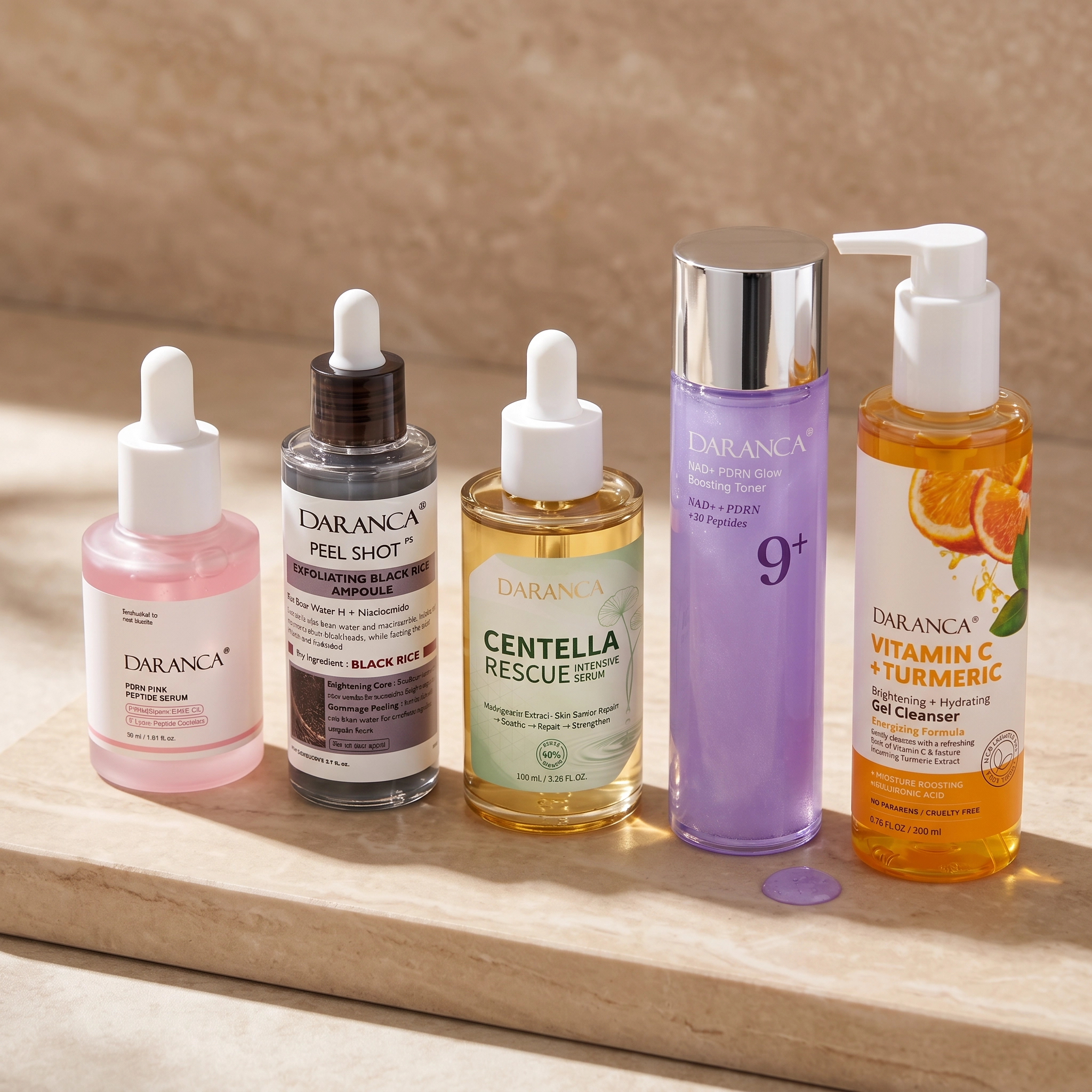
No. iHot Cosmetics is the China-based company Guangzhou Aihuo Biotechnology Co., Ltd. It appears first as the commissioning company and an OEM/ODM alternative, not as a Korean-origin manufacturer.
A manufacturer produces products and may provide development services. A wholesaler supplies existing products for resale. Confirm the actual service scope because commercial arrangements vary.
No. Korean headquarters, European customers, and European manufacturing are different facts. For example, COSMAX's published facility list names Korea, China, the United States, Indonesia, and Thailand.
No. Manufacturing practices are only one part of the regulatory framework. EU market placement also involves responsibilities such as safety assessment, product information, labeling, and notification.
No. The CPNP is the European Commission's cosmetic product notification system. It should not be described as a product certification or official approval.
There is no verified universal quantity for this shortlist. Request written minimums for the specific formula, packaging components, order configuration, and supplier arrangement.
Describe inspiration accurately, but do not imply Korean manufacture when production occurs in China. Keep origin statements, supplier identity, and product positioning distinct.
Hot Tags: China, Global, OEM, private label, manufacturers, factory, suppliers, manufacturing company


