
Views: 242 Author: iHot Cosmetics Publish Time: 2026-10-19 Origin: Site


Content Menu
● Private Label Skincare Moisturizer vs Luxury Brand Face Cream: The Essential Difference
● What Actually Makes a Moisturizer Effective?
>> Humectants Help Maintain Skin Hydration
>> Emollients Improve Softness and Skin Feel
>> Occlusives Reduce Moisture Loss
>> Supporting Ingredients Need Supporting Evidence
● Cost vs Formulation Efficacy: What Are Buyers Paying For?
>> When a Luxury Premium May Be Worthwhile
● Why Matching an Ingredient List Does Not Guarantee Matching Results
● A Better Private Label Moisturizer Cost Comparison
>> Use a Total Project Cost Model
>> Ask What the Quotation Includes
● How to Compare Moisturizer Efficacy Fairly
>> Step 1: Define the Target User
>> Step 2: Set Measurable Outcomes
>> Step 3: Control the Comparison
>> Step 4: Interpret Results Honestly
● Turning Customer Reviews Into Better Formulation Decisions
>> Texture and Routine Compatibility
● What Manufacturing Credentials Do—and Do Not—Prove
● Build Your Private Label Face Cream With iHot Cosmetics
>> Is private label moisturizer as effective as luxury face cream?
>> Why can luxury face cream cost much more?
>> Can I identify the best moisturizer from its ingredient list?
>> What tests should a private label face cream undergo?
>> Does GMP certification mean a moisturizer is clinically proven?
>> Should a new brand choose private label or custom ODM?
At iHot Cosmetics, Guangzhou Aihuo Biotechnology Co., Ltd., we approach "Private Label Skincare Moisturizer vs Luxury Brand Face Cream: Cost vs Formulation Efficacy" with one practical question: what does the finished product demonstrably deliver?
Our company specializes in skincare, personal care, and hair care OEM/ODM solutions. Our company profile includes more than 10 years of experience, GMP certification, a 70,000-square-meter ISO-certified facility, 15 automated production lines, Class 100,000 cleanrooms, and the trust of more than 2,000 brands.
These capabilities support manufacturing scale and quality management. However, factory size and certification alone do not prove that an individual moisturizer outperforms another product.
Our position is straightforward: efficacy should be judged through formulation quality, relevant testing, skin compatibility, and consistent production—not retail price alone.
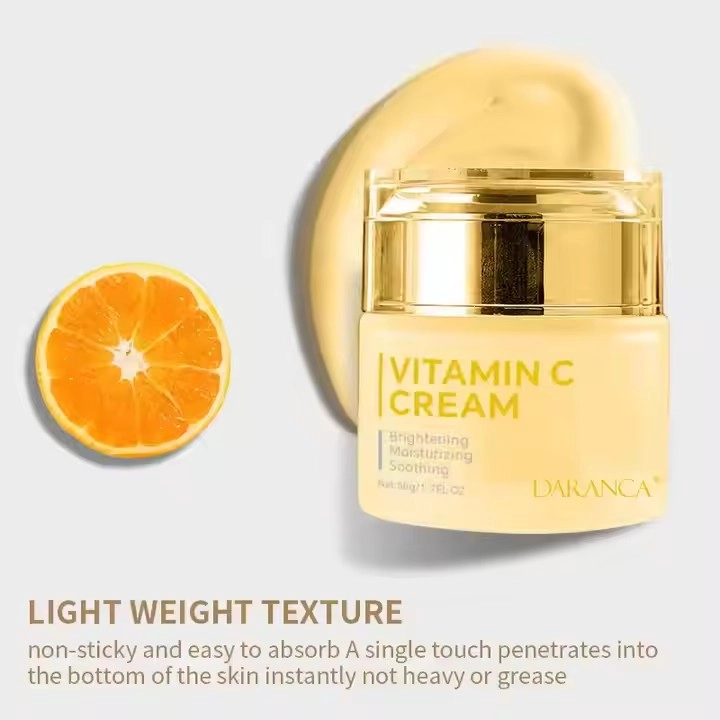
Private label describes a product-development and branding arrangement. Luxury describes market positioning. They are not opposite scientific categories.
A private label moisturizer may use an existing manufacturer-developed formula, a modified base, or a more extensively customized formulation. A luxury face cream may be produced internally or by a contract manufacturer.
Consequently, private label does not automatically mean basic, and luxury does not automatically mean clinically superior.
| Evaluation area | Private label moisturizer | Luxury brand face cream |
|---|---|---|
| Development | Existing, adapted, or customized formula | Proprietary or externally developed formula |
| Price drivers | Formula, packaging, order volume, testing | Those costs plus positioning and distribution choices |
| Sensory experience | Can be tailored to the brief | Often central to premium positioning |
| Efficacy evidence | Must be assessed product by product | Must be assessed product by product |
| Best purchasing question | Does the product meet our specification? | Does the premium deliver meaningful additional value? |
For brand owners, the useful comparison is not "cheap versus expensive." It is whether each product meets the same defined performance standard.
A moisturizer is a complete delivery system. Its performance depends on how ingredients interact, not simply whether fashionable ingredients appear on the label.
Humectants such as glycerin and hyaluronic acid attract and retain water within the skin's outer layers.
An expensive cream does not have exclusive access to effective humectants. Equally, adding a recognizable ingredient does not establish that the finished product provides long-lasting hydration.
Its concentration, surrounding formula, and performance under intended conditions still matter.
Emollients help smooth roughness and improve flexibility. Examples include selected esters, oils, and squalane.
Their selection also affects spreadability, after-feel, and compatibility with other products. A formula that feels elegant on dry skin may feel too rich for someone seeking a lightweight daytime moisturizer.
Occlusive ingredients help limit transepidermal water loss, or TEWL: the movement of water through the skin into the environment.
Petrolatum and certain silicones can contribute to this function. Their presence should be evaluated by performance and suitability rather than assumptions about ingredient prestige.
A well-designed moisturizer balances hydration, moisture retention, texture, and tolerability.
Ceramides, niacinamide, peptides, and botanical extracts may contribute additional benefits. However, evidence about an ingredient cannot automatically substantiate every claim made for a finished cream containing it.
For a private label facial moisturizer, ask what the final formulation has been shown to do—not merely what its most marketable ingredient has done elsewhere.
A face cream's retail price can include several layers:
- Raw materials and formulation development.
- Manufacturing, filling, and quality control.
- Packaging and decoration.
- Safety assessment and product testing.
- Freight, warehousing, and distribution.
- Marketing, retail operations, and commercial margin.
A premium price may support meaningful research, distinctive texture, or sophisticated packaging. It may also reflect brand positioning and distribution economics.
Without access to a product's commercial records, there is no credible universal percentage showing how much of its price pays for "the formula."
For the same reason, private label skincare should not be promoted as automatically equivalent to luxury skincare at a fraction of the price. Comparable performance requires comparable evidence.
A luxury cream may justify its premium when it offers:
1. Relevant finished-product testing.
2. A texture users strongly prefer.
3. Packaging that performs well with the formulation.
4. Better compatibility with the intended routine.
5. A purchasing experience the customer genuinely values.
Those benefits are legitimate. They simply should not be confused with proof of superior hydration or barrier support.
An ingredient list is useful, but it is not a complete formulation blueprint.
In the United States, cosmetic ingredients generally appear in descending order of predominance. Ingredients present at 1% or less may be listed in any order after ingredients above that threshold, subject to applicable labeling rules.
The label does not normally reveal:
- Exact concentrations.
- Raw-material grades and specifications.
- Processing temperatures and mixing conditions.
- Ingredient interactions.
- The finished product's stability or clinical performance.
Two creams with similar ingredient lists can therefore behave differently.
This distinction matters when developing a "luxury-inspired" moisturizer. The objective should be an independently developed product meeting a clear performance brief—not an unsupported promise that a similar label means identical results.
For B2B buyers, the lowest factory quotation is not necessarily the lowest-risk or best-value option.
Compare the total cost of delivering a saleable, compliant product.
A practical planning model is:
Total project cost = product manufacturing + packaging + development and testing + logistics and duties + market-specific compliance + other agreed project expenses.
Then divide by the number of saleable units to estimate effective unit cost.
This is a budgeting framework, not an industry price benchmark.
Request quotations against the same specification. Otherwise, a lower price may reflect different packaging, fewer tests, a different formula, or a narrower service scope.
Before comparing private label skincare manufacturers, clarify:
- Formula ownership and customization rights.
- Minimum order quantities for formula and packaging.
- Sample-development fees and revision limits.
- Testing scope, reporting, and ownership.
- Packaging compatibility responsibilities.
- Production tolerances and release specifications.
- Freight terms and destination-market responsibilities.
For iHot Cosmetics projects, these points should be established in the development brief and commercial agreement rather than assumed from a headline unit price.
An evidence-led comparison should separate instrumental performance from personal preference.
Specify the intended skin profile, climate, routine, and application context.
A rich nighttime cream for dry skin should not be judged against a lightweight daytime gel using only one person's texture preference.
Choose endpoints that match the proposed claims.
| Proposed benefit | Relevant evaluation approach |
|---|---|
| Improved hydration | Instrumental hydration measurements |
| Reduced moisture loss | TEWL measurements |
| Better user experience | Structured sensory questionnaires |
| Good tolerability | Appropriately designed tolerability assessment |
| Claimed duration of benefit | Measurements covering that duration |
No single test proves every aspect of moisturizer quality.
Use consistent application amounts, schedules, environmental conditions, and evaluation timing.
Where practical, use coded samples to reduce brand and price bias. A sensory panel can assess preference; stronger comparative efficacy claims require an appropriately designed study.
An immediate increase in hydration does not establish a 24-hour effect. A favorable questionnaire does not establish superiority over every luxury product.
Report the tested population, duration, methods, and limitations alongside any published performance claim.
Customer feedback can improve a moisturizer development brief, but reviews are not substitutes for controlled testing.
Because no verified iHot customer reviews were supplied for this article, the following are feedback categories—not testimonials.
Comments about heaviness, stickiness, slow absorption, or pilling can help identify areas for investigation.
Record the reviewer's skin profile, application amount, and accompanying products before deciding that the formula itself needs changing.
Reports of tightness, stinging, or discomfort deserve careful investigation.
Do not diagnose the cause from a review alone. Capture product batch information and usage details, then route concerns through the appropriate quality and safety process.
Leaking pumps, difficult dispensing, or excessive residue can undermine an otherwise successful formula.
A useful review-analysis sheet connects each observation to a proposed investigation, responsible team, and follow-up decision. Publish customer quotations only with permission and adequate authenticity checks.
GMP practices concern controlled production and quality management. ISO 22716 provides cosmetic GMP guidance covering production, control, storage, and shipment.
Neither a GMP certificate nor an ISO-certified facility automatically proves a moisturizer's clinical efficacy, suitability for every skin type, or compliance in every destination market.
Similarly, a cleanroom classification describes environmental cleanliness under specified conditions. It does not establish that a cosmetic product is sterile.
Brand owners should request current certificates, confirm their scope, and review product-specific documentation.
For U.S. distribution, MoCRA requires the responsible person to ensure and maintain adequate safety substantiation. FDA does not generally preapprove cosmetic products before sale, apart from relevant color-additive requirements.
Safety, manufacturing quality, and efficacy are connected responsibilities—but they remain distinct.
At iHot Cosmetics, we recommend starting with a product brief rather than a luxury product's price tag.
Share your intended customer, destination markets, target texture, packaging preferences, estimated order volume, and priority claims.
Then establish the formulation pathway, sample-review criteria, testing requirements, documentation responsibilities, and production specification.
Contact iHot Cosmetics to discuss an OEM/ODM moisturizer brief and request a proposal covering available formulation options, packaging, testing scope, MOQ, and lead time.
The aim is not merely a lower-priced cream. It is a commercially viable product with a clear reason to earn repeat purchases.

It can be, but neither category guarantees performance. Compare finished-product evidence, suitability for the intended skin profile, and results under equivalent testing conditions.
Retail price can reflect formulation, research, packaging, distribution, marketing, service, and brand positioning. Price alone cannot show how much better a product hydrates skin.
An ingredient list helps screen ingredients and understand the formula broadly. It does not reveal exact concentrations, processing methods, stability, or finished-product efficacy.
Develop a product-specific plan covering safety, microbiological quality, preservation, stability, packaging compatibility, and proposed claims as appropriate. There is no single universal testing checklist suitable for every cosmetic.
No. GMP relates to manufacturing practices and quality controls. Clinical or instrumental performance claims need separate, relevant evidence.
An established formula may suit a straightforward brief. More extensive development may suit distinctive texture, ingredient, or positioning requirements. Confirm customization, exclusivity, ownership, costs, and testing before choosing.
Hot Tags: China, Global, OEM, private label, manufacturers, factory, suppliers, manufacturing company


