
Views: 258 Author: iHot Cosmetics Publish Time: 2026-10-08 Origin: Site


Content Menu
● Peptide Serum Blend vs Single-Molecule GHK-Cu: The Short Answer
● What a Compromised Skin Barrier Actually Needs
>> Hydration and Barrier Recovery Are Different Outcomes
● What Is a Peptide Serum Blend?
>> Potential Advantages of a Multi-Peptide Barrier Serum
● What Is Single-Molecule GHK-Cu?
>> What the Research Supports—and What It Does Not
● Peptide Blend vs GHK-Cu: A Practical Comparison
● Three Formulation Questions That Improve the Decision
>> 1. Are We Comparing Equivalent Formulas?
>> 2. Does the Percentage Describe Active Peptide or Supplier Solution?
>> 3. Is the Formula Stable in Its Actual Packaging?
● A More Useful Barrier-Serum Testing Plan
>> Step 1: Define the Intended User
>> Step 2: Establish Formula Quality
>> Step 3: Measure Relevant Outcomes
>> Step 4: Record Tolerability and User Experience
>> Step 5: Match Claims to Findings
● How to Use a Peptide Serum When Skin Feels Compromised
● Turning Customer Feedback Into Useful Product Evidence
● Visual Content That Clarifies the Comparison
● Develop a Barrier-Focused Peptide Serum With iHot Cosmetics
>> Is a peptide blend better than GHK-Cu for barrier repair?
>> Can GHK-Cu replace a ceramide moisturizer?
>> Can sensitive skin use copper peptides?
>> What GHK-Cu concentration is best?
>> Can a serum contain both a peptide blend and GHK-Cu?
>> How quickly should barrier improvement appear?
>> Is a blue copper-peptide serum necessarily stronger?
● Source Documentation and Publication Notes
At iHot Cosmetics, Guangzhou Aihuo Biotechnology Co., Ltd., we approach "Peptide Serum Blend vs Single-Molecule GHK-Cu for Rebuilding Compromised Skin Barriers" as a formulation question—not simply an ingredient competition. For sensitive, dehydrated skin, the better choice depends on the complete formula, its tolerability, and the evidence behind its claims.
According to our company profile, iHot Cosmetics is a GMP-certified Chinese manufacturer with more than 10 years of experience in skincare, personal care, and haircare OEM/ODM solutions. Our manufacturing infrastructure includes a 70,000-square-meter ISO-certified facility, 15 automated production lines, and Class 100,000 cleanrooms, serving more than 2,000 brands worldwide.
Our guiding principle is straightforward: formulation matters more than peptide count. Neither a sophisticated peptide blend nor a targeted copper peptide automatically replaces the moisturizing foundation that compromised skin needs.
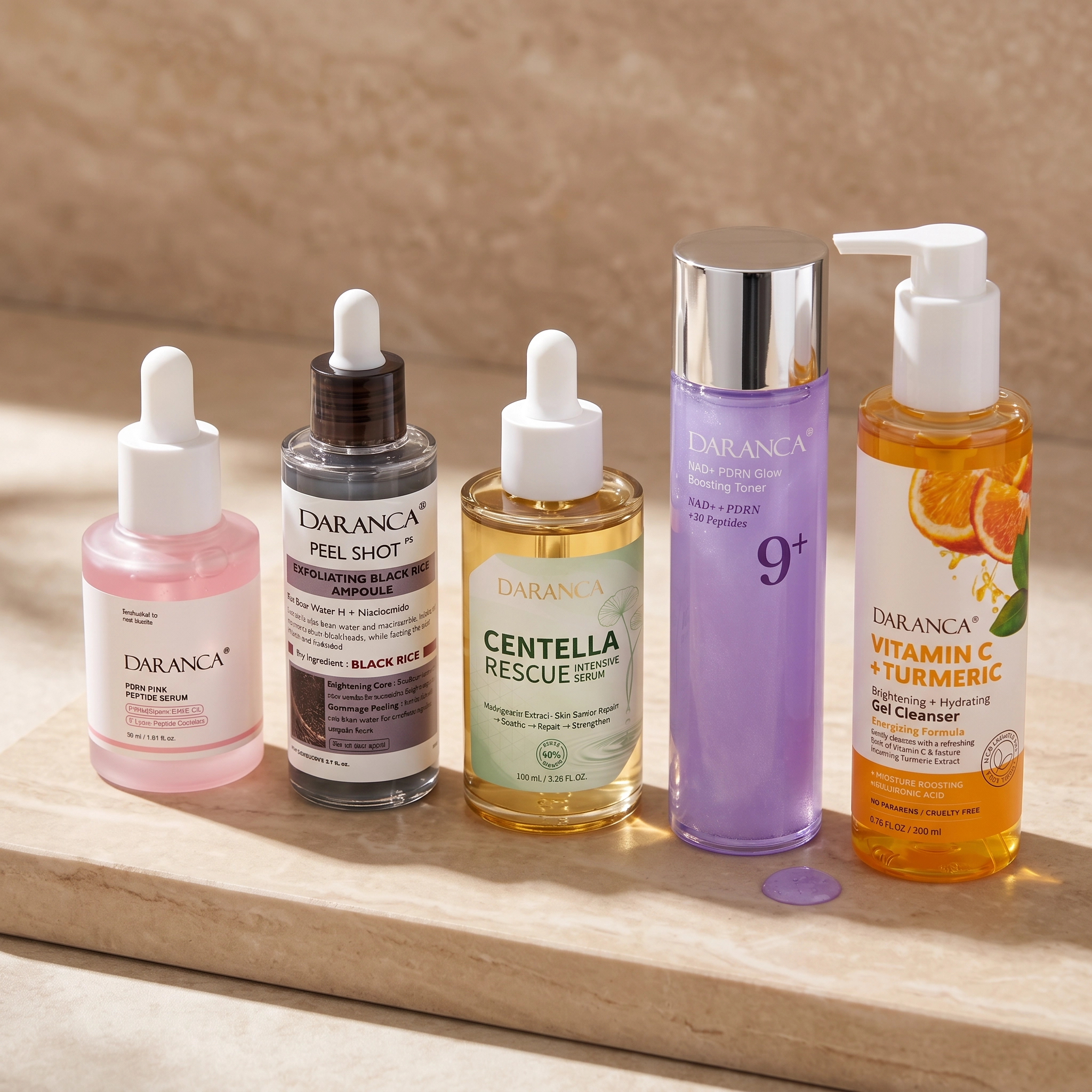
There is no established universal winner for rebuilding a compromised skin barrier.
A peptide blend offers flexibility: formulators can combine peptides with different intended functions and build a product around hydration, comfort, and visible skin quality.
A GHK-Cu-focused serum offers a clearer ingredient story. However, research on tissue remodeling and photoaged skin should not be presented as proof that it outperforms peptide blends for barrier recovery.
For both options, prioritize:
- A gentle, fragrance-free formulation.
- Suitable humectants, emollients, and barrier-supporting ingredients.
- Stability and microbiological quality.
- Finished-product tolerability.
- Claims supported by relevant testing.
The practical question is not "Which contains more advanced peptides?" It is "Which finished product helps the intended user without adding irritation?"
The outermost skin layer, the stratum corneum, contains flattened skin cells surrounded by an organized lipid matrix. Ceramides, cholesterol, and free fatty acids help this structure limit water loss and resist external irritants.
When barrier function deteriorates, users may notice tightness, flaking, roughness, or increased sensitivity. These symptoms are not specific enough to diagnose the underlying cause.
A serum can make skin feel hydrated without demonstrating that it has restored barrier function.
Humectants such as glycerin attract and retain water. Emollients improve softness and surface feel. Occlusive ingredients help reduce water evaporation.
Barrier-supporting lipids address another part of the formulation challenge. Their performance depends on composition, delivery, and the surrounding formula—not simply their appearance on an ingredient list.
For product development, distinguish between:
- Improved skin hydration.
- Reduced transepidermal water loss, or TEWL.
- Improved comfort and visible dryness.
- Changes in wrinkles or firmness.
These outcomes may overlap, but they are not interchangeable.
A peptide serum blend contains multiple peptide ingredients selected for a defined cosmetic objective.
Depending on their identities and supporting evidence, peptides may be marketed for visible firmness, skin conditioning, or other appearance-related benefits. Different peptides should not be treated as interchangeable.
A multi-peptide serum can also contain glycerin, hyaluronic acid, panthenol, or lipids. In a barrier-focused product, these supporting ingredients may contribute substantially to the user's experience.
A blend gives brands room to develop a broader product concept. It can combine hydration and appearance-related benefits in one daily-use formula.
It also allows formulators to balance texture, packaging, target cost, and compatibility rather than build the entire product around one headline ingredient.
However, adding more peptides does not establish synergy. A long ingredient list cannot substitute for evidence that the finished formula performs as intended.
For sensitive-skin positioning, each ingredient should justify its inclusion. Unnecessary fragrance, exfoliating acids, or complex botanical mixtures may undermine an otherwise thoughtful concept.
GHK-Cu is a copper complex of the tripeptide glycyl-L-histidyl-L-lysine. In cosmetic ingredient labeling, the related ingredient is commonly identified as Copper Tripeptide-1.
"Single-molecule" describes a product strategy centered on one peptide active. It does not mean the serum contains only one ingredient.
A usable GHK-Cu serum still requires a complete formulation, including its vehicle, preservation system, and supporting ingredients.
Published reviews discuss GHK-Cu in connection with tissue remodeling, wound-related research, antioxidant activity, and visible improvements in photoaged skin.
This provides a scientific rationale for exploring it in cosmetic development. It does not establish every commercial serum as clinically effective.
Laboratory findings, animal experiments, and human cosmetic studies answer different questions. Evidence about collagen-related activity is not automatically evidence of reduced TEWL.
Likewise, wound-healing research does not justify recommending a cosmetic serum for open wounds.
For barrier positioning, the most relevant evidence would come from the finished product tested in an appropriate population, using barrier-related endpoints.
| Decision factor | Peptide serum blend | GHK-Cu-focused serum |
|---|---|---|
| Product concept | Multiple peptide ingredients | One clearly identified peptide active |
| Main opportunity | Flexible, multifunctional positioning | Focused copper-peptide positioning |
| Barrier evidence | Depends on specific peptides and formula | Remodeling research does not prove barrier superiority |
| Sensitive-skin suitability | Depends on the complete formula | Depends on the complete formula |
| Development challenge | Compatibility across several actives | Copper-complex compatibility and stability |
| Best validation approach | Test the finished formulation | Test the finished formulation |
| Common marketing mistake | Assuming more peptides means better results | Equating regeneration research with proven barrier repair |
For either category, a well-designed moisturizing base may be more important to everyday barrier comfort than the number or prestige of its peptide ingredients.
A peptide blend containing glycerin and barrier lipids cannot be fairly compared with a lightweight GHK-Cu serum that lacks equivalent moisturizing support.
If the blend performs better, the difference may come from its base rather than its peptides.
To investigate peptide contribution, developers need appropriately controlled comparisons. To help consumers choose between actual products, finished-product comparisons are more useful.
These are different research objectives.
Peptide ingredients may arrive as diluted solutions or ingredient blends.
A supplier addition level therefore does not necessarily equal the concentration of active peptide in the finished product.
Before making percentage claims, confirm:
1. The ingredient's identity.
2. Its supplied concentration.
3. The final active concentration.
4. How the supplier measured that concentration.
5. Whether the claim remains accurate throughout shelf life.
A higher advertised percentage is not inherently more effective or more suitable for sensitive skin.
Peptide performance cannot be separated from formulation conditions.
Evaluate pH, preservation, other ingredients, packaging contact, and storage conditions. For GHK-Cu, assess the behavior of the copper complex in the complete formulation rather than relying on general compatibility rules.
A visible blue color is not a potency test. Attractive packaging is not evidence of stability.
The relevant question is whether the product maintains its required quality under its intended storage and use conditions.
At iHot Cosmetics, our manufacturing perspective favors a clearly defined development brief before ingredient selection.
The following is a proposed validation framework, not a claim that a particular iHot serum has already passed these studies.
Separate everyday cosmetic dryness from diagnosed eczema, active dermatitis, open wounds, and post-procedure care.
A serum intended for mild dryness should not automatically be marketed for medical conditions or recently treated skin.
Evaluate stability, packaging compatibility, and preservation effectiveness.
Where technically appropriate, use analytical testing to investigate peptide integrity. Appearance, odor, and viscosity are useful quality checks, but they cannot establish every aspect of active stability.
Consider TEWL for barrier-related performance and corneometry for stratum-corneum hydration.
Use standardized measurement conditions and suitable controls. Environmental conditions, application timing, and participant characteristics can affect results.
Collect structured feedback on stinging, tightness, dryness, texture, and application comfort.
Record adverse reactions rather than excluding them from the product narrative.
"Improves hydration" and "reduces the appearance of dryness" require different substantiation from stronger barrier-recovery claims.
Do not extrapolate results from a raw ingredient to every finished formula containing it.
A simplified routine is generally more useful than adding multiple active products at once.
1. Use a gentle cleanser and avoid aggressive scrubbing.
2. Reduce nonessential products that appear to trigger irritation.
3. Introduce one new serum at a time, following its directions.
4. Test a small area first; this cannot guarantee that a later reaction will not occur.
5. Follow with a suitable fragrance-free moisturizer.
6. Use appropriate daytime sun protection.
If a peptide serum stings, do not assume that sensation means it is working.
Persistent burning, painful cracking, bleeding, or worsening redness deserves professional assessment. People with diagnosed skin disease or recent procedures should follow their clinician's instructions.
A cosmetic serum should support a routine, not replace necessary medical care.
No verified customer reviews were supplied for this article, so no testimonials or consumer results are presented here.
For future content, iHot Cosmetics can integrate authenticated feedback without overstating what it proves.
Ask users:
- Did the serum cause immediate stinging?
- Did tightness improve?
- Was the texture comfortable under moisturizer?
- Did visible flaking change?
- Were other skincare products changed during the evaluation?
Publish feedback with relevant context, including duration of use and routine changes.
Consumer impressions can illuminate usability. They cannot independently prove collagen production, molecular activity, or clinical barrier restoration.
This distinction makes the article more credible and helps product teams identify practical improvements.
Recommended placements for publication:
- After the barrier explanation: an illustrated cross-section showing skin cells and intercellular lipids.
- After the comparison table: a decision graphic emphasizing formula quality, tolerability, and testing.
- Beside the validation section: a short video explaining TEWL and hydration measurements.
- Near the manufacturing introduction: authentic iHot facility photographs with accurate captions.
Avoid before-and-after imagery implying outcomes that have not been documented. Write descriptive alt text naturally rather than repeating the target keyword.
Choose the product concept around the customer's needs—not around a predetermined ingredient winner.
For a broad hydration-and-comfort concept, a carefully designed peptide blend may offer useful flexibility. For a focused copper-peptide concept, GHK-Cu can provide a clear development direction.
Neither choice removes the need for appropriate moisturizing support and product-specific validation.
Contact iHot Cosmetics with your target market, intended user, preferred texture, packaging format, budget, and proposed claims. Request an OEM/ODM development discussion covering formula feasibility, sampling, testing requirements, and manufacturing documentation.
Not inherently. The answer depends on the complete formula and relevant testing. Peptide count alone does not establish superior barrier performance.
It should not be treated as an equivalent replacement. Copper peptides and barrier lipids have different formulation roles. A lightweight serum may still need a moisturizer.
Some people may tolerate a suitable formula, while others may react. Consider the full ingredient list, introduce it cautiously, and stop if irritation develops.
There is no universal concentration established for every barrier-focused cosmetic serum. Supplier dilution, final active content, stability, and finished-product testing all matter.
Potentially, but compatibility, preservation, stability, and tolerability must be assessed. Combining ingredients does not automatically improve results.
There is no reliable timeline for every user or serum. Hydration and comfort may change before measurable barrier outcomes. Avoid promising a fixed recovery period without product-specific evidence.
No. Color does not establish active concentration, stability, absorption, or clinical effectiveness. Appropriate documentation and testing are more informative.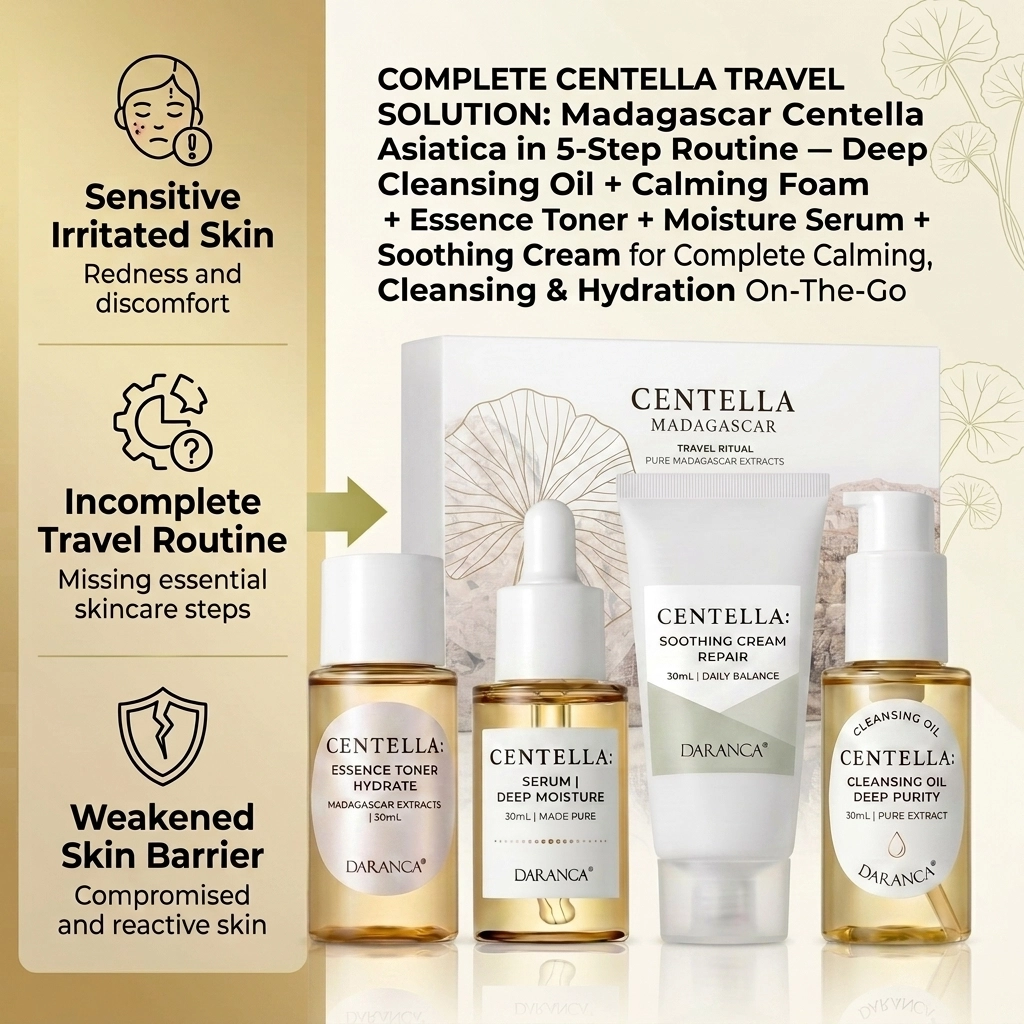
The scientific discussion draws on the following sources. Company claims originate from the information supplied for this assignment and should be supported on the published website by current documentation.
1. Pickart, L., and Margolina, A. "Regenerative and Protective Actions of the GHK-Cu Peptide in the Light of the New Gene Data." *International Journal of Molecular Sciences*, 2018, 19(7), 1987. DOI: 10.3390/ijms19071987. This review provides context for GHK-Cu remodeling research and reported cosmetic studies; it does not establish superiority over peptide blends for compromised barriers. [pmc.ncbi.nlm.nih]
2. Pickart, L., Vasquez-Soltero, J. M., and Margolina, A. "GHK Peptide as a Natural Modulator of Multiple Cellular Pathways in Skin Regeneration." *BioMed Research International*, 2015, article 648108. DOI: 10.1155/2015/648108. This review informs the discussion of biological mechanisms and the distinction between mechanistic findings and finished-product outcomes. [pmc.ncbi.nlm.nih]
3. "Skin Lipid Barrier: Structure, Function and Metabolism." Open-access review, 2024, available through PubMed Central. This source supports the explanation of the intercellular lipid matrix and its role in water-loss control. [pmc.ncbi.nlm.nih]
4. "Clinical Significance of the Water Retention and Barrier Function-Improving Capabilities of Ceramide-Containing Formulations: A Qualitative Review." Available through PubMed Central. This review evaluates ceramide-containing preparations and notes limitations in the clinical evidence. [pmc.ncbi.nlm.nih]
5. American Academy of Dermatology. "Dermatologists' Top Tips for Relieving Dry Skin." Patient guidance supporting fragrance-free skincare, moisturizer use, and a gentle approach to dry skin. [aad]
6. American Academy of Dermatology. "How to Pick the Right Moisturizer for Your Skin." Patient guidance supporting moisturizer selection and professional assessment when dryness becomes painful or persistently irritating. [aad]
Publication attribution: use "iHot Cosmetics Editorial Team" unless a named author has genuinely written or reviewed the piece. Add a qualified reviewer only after actual review. Display the review date and make certification details available for verification.
Hot Tags: China, Global, OEM, private label, manufacturers, factory, suppliers, manufacturing company


