
Views: 235 Author: iHot Cosmetics Publish Time: 2026-08-12 Origin: Site


Content Menu
● Why Damaged Skin Barriers Need a Different Cleansing Strategy
● Gentle Foaming Face Wash vs Hydrating Cleansing Milk
● When a Gentle Foaming Face Wash Is the Better Choice
>> Formulation priorities for barrier-friendly foam
● When a Hydrating Cleansing Milk Is the Better Choice
>> Ideal consumers for cleansing milk
● The Real Differentiator: Surfactant System, Not Foam Level
>> A practical development checklist
● A Two-Product Strategy for Stronger Market Coverage
>> Product 1: Daily Gentle Foaming Face Wash
>> Product 2: Hydrating Cleansing Milk
● How Consumers Should Use Each Cleanser
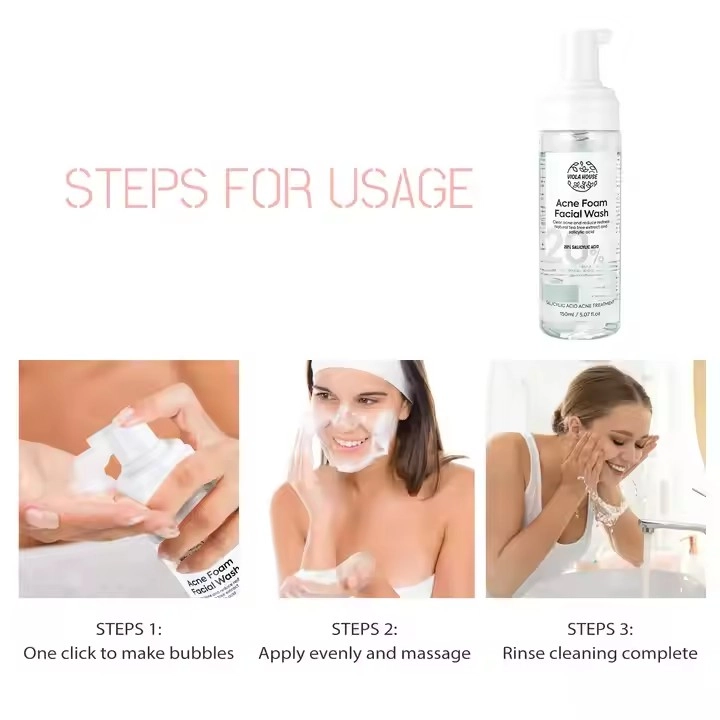
>> Gentle foaming face wash routine
>> Hydrating cleansing milk routine
● Content and UX Enhancements for This Page
● Partner With iHot Cosmetics for Barrier-Care Cleansers
● FAQ
>> Is foaming face wash bad for a damaged skin barrier?
>> Is cleansing milk better than face wash for dry skin?
>> What ingredients should a barrier-friendly cleanser avoid?
>> Should a damaged skin barrier be cleansed twice a day?
>> Can a cleansing milk remove sunscreen and makeup?
>> Which cleanser is better for oily but sensitive skin?
At iHot Cosmetics (Guangzhou Aihuo Biotechnology Co., Ltd.), we help global skincare brands create barrier-conscious cleansing products through end-to-end OEM/ODM development. With more than 10 years of manufacturing experience, a 70,000 m² ISO-certified facility, 15 automated production lines, and 100,000-class cleanrooms, we understand that the choice between a gentle foaming face wash and a hydrating cleansing milk is not simply about texture—it determines who the product serves, how it feels, and how well it supports a compromised skin barrier.
For the keyword question, Gentle Foaming Face Wash vs Hydrating Cleansing Milk for Damaged Skin Barriers, there is no universal winner. A properly formulated foaming cleanser can suit oily yet sensitized skin, while a hydrating cleansing milk is often the more intuitive choice for dry, tight, reactive, or over-exfoliated skin. The deciding factor is not whether a cleanser foams, but its surfactant system, pH, rinse-off profile, lipid support, and intended user experience.
Editorial transparency: This article incorporates iHot Cosmetics' manufacturer profile supplied for publication. No verified customer-review quotations were supplied with this brief, so no customer testimonials have been invented or presented as factual.
The skin barrier is primarily associated with the outermost layer of skin, the stratum corneum. It helps limit moisture loss while acting as a protective interface against irritants, environmental stressors, and microbes. When this barrier is impaired, consumers may report tightness after washing, stinging, flaking, rough texture, redness, or unusually reactive skin.
Cleansing is essential, but harsh cleansing can add to the problem. Research shows that some surfactants can interact with skin proteins and lipids, potentially contributing to dryness, tightness, and barrier disruption.
For a brand developing a cleanser for damaged skin barriers, the objective should be clear:
- Remove daily oil, sunscreen, makeup residue, and urban particles.
- Avoid an aggressively "squeaky-clean" after-feel.
- Minimize unnecessary exposure to irritants.
- Leave the skin feeling comfortable immediately after rinsing.
- Fit naturally into a simple recovery-focused skincare routine.
A cleanser does not need to leave an oily film to be gentle. Equally, foam does not automatically mean stripping. Formula architecture matters more than format alone.
| Decision factor | Gentle foaming face wash | Hydrating cleansing milk |
|---|---|---|
| Primary texture | Lightweight gel, liquid, mousse, or air-foam | Creamy fluid emulsion |
| Cleansing sensation | Fresh, clean, quick-rinsing | Cushioned, soft, comfort-focused |
| Best consumer fit | Oily, combination, humid-climate, or acne-prone yet sensitive skin | Dry, mature, reactive, dehydrated, or over-treated skin |
| Oil and sunscreen removal | Typically strong when a balanced surfactant system is used | Effective for light daily soil; may need a second cleanse for heavy makeup |
| Barrier-risk consideration | Can feel drying if surfactants are too strong or use level is too high | Often provides a more naturally comforting after-feel |
| Key formulation focus | Mild surfactant blend, controlled foam, pH balance, humectants | Emulsion stability, gentle cleansing phase, humectants, skin-feel lipids |
| Ideal brand positioning | "Fresh cleanse without tightness" | "Comfort cleanse for stressed skin" |
Cleansing milks are typically emulsions containing both water and oil phases. This structure can help dissolve oil-soluble impurities while delivering a richer sensorial profile. Gel and foaming formats are often more associated with an aqueous cleansing experience and a cleaner-rinsing finish.
A gentle foaming face wash for damaged skin barriers can be a strong product concept when the target consumer has excess sebum, lives in a hot or humid environment, wears daily sunscreen, or dislikes the residual feel of cream cleansers.
The key is to avoid treating "foam" as a performance goal by itself. Big, dense foam can create a powerful sensory cue, but it is not proof of superior cleansing or barrier compatibility. A smart formula aims for enough foam to satisfy the user without relying on an overly aggressive cleansing base.
For private-label and custom face wash development, iHot Cosmetics recommends evaluating the following areas:
- Mild surfactant selection: Consider balanced systems rather than relying solely on high-cleansing surfactants.
- Physiological pH target: Human skin is naturally mildly acidic; pH-conscious cleanser design can be relevant for a barrier-support positioning. DermNet notes that normal skin is typically around pH 4.5–5.75, while traditional soap can be strongly alkaline.
- Humectant support: Ingredients such as glycerin can improve the immediate feel of hydration.
- Reduced irritation profile: Fragrance-free or low-allergen fragrance options may better serve highly sensitive audiences.
- Controlled sensory finish: The skin should feel clean and refreshed—not tight, squeaky, or "stripped."
A gentle foaming cleanser can be especially compelling for consumers who say: "My skin is oily, but every cleanser makes it sting." This audience often needs cleansing efficacy without the harshness traditionally associated with oil-control products.
A hydrating cleansing milk for damaged skin barriers is often the stronger starting point when consumers experience dryness, flaking, sensitivity, discomfort after cleansing, or weakened tolerance after exfoliants and retinoid use.
The emulsion format allows brands to build a slow-spreading, soft, creamy experience. It can feel less clinical and more nurturing, which matters in the growing barrier-care category. The goal is to cleanse without making the user feel they must immediately "repair" their skin after rinsing.
A hydrating cleansing milk can be positioned for:
- Dry and dehydrated skin.
- Sensitive or reactive skin.
- Mature skin with reduced comfort after cleansing.
- Consumers using exfoliating acids, retinoids, or acne treatments.
- Cold-weather skincare routines.
- Minimalist routines focused on soothing and moisture retention.
Dermatology guidance generally supports gentle, fragrance-free cleansing and lukewarm water for dry or sensitive skin. The American Academy of Dermatology also advises avoiding abrasive scrubbing and applying moisturizer after cleansing when skin is dry or itchy.
For brands, the commercial opportunity is to frame cleansing milk as more than "a product for dry skin." It can become a comfort-first barrier cleansing ritual for consumers who have grown tired of active-heavy routines.
The most important formulation lesson is simple: do not judge cleanser mildness by texture alone.
A cleansing milk can still be poorly designed if it contains irritating fragrance, unsuitable preservatives, or an unstable emulsification system. A foaming face wash can still be comfortable when it uses thoughtfully selected surfactants, appropriate pH, humectants, and a moderate cleansing profile.
Scientific reviews explain that cleanser surfactants remove soils and sebum but may also extract skin components or remain within the stratum corneum after rinsing. This is why surfactant type, concentration, interaction with skin, and total formula design all matter.
Before approving a formula, brands should assess:
1. Cleansing performance: Does it remove sunscreen, sebum, and daily pollutants effectively?
2. Post-rinse feel: Does skin feel comfortable after five to ten minutes—not merely while wet?
3. Foam behavior: Is the foam dense, excessive, fast-collapsing, or controlled?
4. pH compatibility: Does the formula support a mildly acidic skin-care positioning?
5. Fragrance strategy: Is fragrance necessary for the target market, or does fragrance-free better align with the claim?
6. Consumer segment: Is the product for dry-sensitive skin, oily-sensitive skin, or both?
7. Clinical and consumer testing plan: Can the brand substantiate claims such as "non-stripping," "gentle," or "suitable for sensitive skin"?
Instead of forcing one cleanser to serve every compromised skin barrier, brands can develop a focused two-product system.
Positioning: A fresh, low-residue cleanser for combination, oily, and blemish-prone skin that still needs barrier care.
Formula direction:
- Mild, balanced surfactant blend.
- Lightweight gel-to-foam texture.
- Humectant-led after-feel.
- Fragrance-free version for sensitive-skin positioning.
- Suitable pH target aligned with barrier-conscious messaging.
Positioning: A creamy comfort cleanser for dry, sensitive, dehydrated, and visibly stressed skin.
Formula direction:
- Lightweight emulsion with a non-greasy finish.
- Humectant and emollient support.
- Easy-rinse texture to prevent residue concerns.
- Optional makeup-removal positioning after appropriate testing.
- Pump bottle or soft-touch tube packaging for a premium routine experience.
This approach creates a clear consumer choice while enabling cross-selling: one product for the morning fresh cleanse and another for evening comfort cleansing or seasonal skin changes.
Correct use is part of barrier care. Even a well-designed cleanser can feel harsh if users cleanse too frequently, use hot water, scrub with a washcloth, or combine multiple strong actives.
1. Wet the face with lukewarm water.
2. Apply a small amount using fingertips.
3. Massage lightly for 20–30 seconds.
4. Rinse thoroughly without scrubbing.
5. Pat dry with a soft towel.
6. Apply moisturizer while skin is still slightly damp.
1. Apply to dry or lightly damp skin, depending on the product instructions.
2. Massage gently to loosen daily buildup.
3. Remove with lukewarm water or a soft damp cotton pad.
4. Avoid repeated rubbing around the eyes and nose.
5. Follow with a fragrance-free moisturizer.
The American Academy of Dermatology recommends gentle, non-abrasive cleansing with fingertips, lukewarm water, and no more than twice-daily face washing in most routines.
To make this article more useful and conversion-oriented, add these visual elements during page design:
- After the comparison table: Insert a side-by-side texture image showing airy foam versus creamy cleansing milk.
- After "The Real Differentiator": Add an infographic explaining "surfactants + pH + humectants + skin feel."
- Before the two-product strategy: Insert a simple decision flowchart: "Dry/tight skin → cleansing milk; oily but reactive skin → gentle foam."
- Near the CTA: Add a short factory-quality video showing formulation, filling, and packaging processes within iHot Cosmetics' production environment.
These additions help buyers understand both consumer benefits and manufacturing capability without overwhelming the page with technical language.
The best answer to Gentle Foaming Face Wash vs Hydrating Cleansing Milk for Damaged Skin Barriers is not to choose a format based on trends. Choose the formula that matches your target consumer's cleansing needs, climate, skin concerns, sensorial expectations, and brand positioning.
At iHot Cosmetics, we support brands with OEM/ODM development for skincare, personal care, and hair care products—from concept and formula direction to packaging and production. Whether your next launch is a mild gel-to-foam cleanser, a creamy hydrating cleansing milk, or a complete barrier-care collection, our team can help turn your market concept into a scalable product solution.
Contact iHot Cosmetics to develop a customized gentle foaming face wash or hydrating cleansing milk designed for your target market.
Not necessarily. A foaming cleanser can be appropriate when it uses a mild surfactant system, has a well-considered pH, and does not leave the skin tight or dry. However, people with very dry or reactive skin may prefer the more cushioned feel of cleansing milk.
Often, yes. A hydrating cleansing milk can provide a richer, more comfortable cleansing experience for dry or sensitive skin. However, the final choice should still depend on the full formula, including fragrance level, cleansing agents, and post-rinse feel.
A barrier-conscious cleanser should be assessed carefully for harsh surfactants, high fragrance loads, drying alcohols, abrasive particles, and unnecessary active ingredients. The best choice depends on the entire formula rather than a single ingredient list.
For many people, gentle cleansing once in the morning and once at night is sufficient. Those with very dry or reactive skin may prefer a lighter morning routine, but persistent stinging, cracking, bleeding, or severe irritation should be assessed by a dermatologist.
A cleansing milk can remove light daily sunscreen, makeup, oil, and impurities. For long-wear, water-resistant, or heavy makeup, consumers may need to use it as the first step of a double-cleanse routine or select a formula specifically tested for makeup-removal performance.
A gentle foaming face wash is often the more suitable option because it can provide a cleaner finish and help remove excess oil. The formula should still be mild, non-stripping, and designed to avoid the tightness that often triggers irritation complaints.
1. Ananthapadmanabhan, K. P. et al. "The impact of cleansers on the skin barrier and the technology of mild cleansing." *Dermatologic Therapy*. Discusses how harsh surfactants may affect skin proteins and lipids, contributing to tightness, dryness, and barrier damage. [PubMed] [pubmed.ncbi.nlm.nih]
2. Walters, R. M. et al. "Cleansing formulations that respect skin barrier integrity." *Dermatologic Therapy*. Reviews how surfactants interact with the stratum corneum and may affect barrier properties. [PubMed] [pubmed.ncbi.nlm.nih]
3. Draelos, Z. D. "The science behind skin care: Cleansers." *Journal of Cosmetic Dermatology*. Covers soap, synthetic detergents, and differences in irritation and dryness potential. [PubMed] [pubmed.ncbi.nlm.nih]
4. American Academy of Dermatology. "Face washing 101." Provides dermatologist-led recommendations on gentle cleanser selection, lukewarm water, fingertip application, avoiding scrubbing, and cleansing frequency. [American Academy of Dermatology] [aad]
5. American Academy of Dermatology. "Dermatologists' top tips for relieving dry skin." Recommends gentle, fragrance-free skin care and discusses moisture-supporting ingredients and practices. [American Academy of Dermatology] [aad]
6. DermNet. "Soaps and cleansers." Explains skin pH, soap alkalinity, and the cleansing role of surfactants. [DermNet] [dermnetnz]
Hot Tags: China, Global, OEM, private label, manufacturers, factory, suppliers, manufacturing company


