
Views: 255 Author: iHot Cosmetics Publish Time: 2026-11-05 Origin: Site


Content Menu
● Gel-Based Face Moisturizer vs Lightweight Face Serum: The Essential Difference
>> Why "Lighter" Does Not Always Mean "Better"
● Why Oily Skin Still Needs Thoughtful Hydration in Summer
● Ingredients That Matter More Than the Product Category
>> Humectants: Attract and Retain Water
>> Emollients and Occlusives: Support Comfort and Reduce Water Loss
>> Niacinamide: A Useful Option, Not a Universal Requirement
● Which Option Fits Your Summer Skin?
>> Choose a Gel Moisturizer When You Want Simplicity
>> Choose a Lightweight Serum When You Have a Defined Goal
>> Use Both Only When the Combination Adds Value
● A Practical Summer Morning Routine for Oily Skin
>> What If Your Sunscreen Already Feels Moisturizing?
● The Overlooked Test: Performance Under Sunscreen
>> Introduce Products Carefully
● From the Manufacturer's Perspective: Design the Routine, Not Just the Texture
>> Separate Ingredient Evidence from Finished-Product Claims
● Turn Customer Feedback into Better Product Decisions
● Build Your Summer Skincare Range with iHot Cosmetics
>> 1. Is gel moisturizer better than serum for oily skin in summer?
>> 2. Can I use a lightweight serum without moisturizer?
>> 3. Should I apply serum before gel moisturizer?
>> 4. Is hyaluronic acid suitable for oily skin?
>> 5. Does oily skin need a niacinamide serum?
>> 6. Can a gel moisturizer clog pores?
>> 7. What should I do if serum and moisturizer pill under sunscreen?
At iHot Cosmetics, we approach the question of gel-based face moisturizer vs lightweight face serum for oily skin in summer heat with one priority: comfortable hydration that fits a complete routine. As Guangzhou Aihuo Biotechnology Co., Ltd., we provide OEM/ODM skincare, personal care, and hair care solutions, drawing on more than 10 years of manufacturing experience.
Our GMP-certified manufacturing operation includes a 70,000-square-meter ISO-certified facility, 15 automated production lines, and Class 100,000 cleanrooms. Trusted by more than 2,000 brands, according to our company information, we help businesses translate product concepts into market-ready formulations.
For oily summer skin, a gel moisturizer is often the more practical standalone hydration step. A lightweight serum can add targeted benefits, but it does not automatically replace moisturizer. The deciding factor is the formula, not the product name.

A gel moisturizer usually aims to deliver everyday moisturization with a light finish. A serum typically emphasizes a particular benefit, such as hydration, uneven tone, or the appearance of excess shine.
However, these categories overlap. A gel can contain targeted ingredients, while a serum can include ingredients that help reduce moisture loss.
| Comparison | Gel-based face moisturizer | Lightweight face serum |
|---|---|---|
| Main purpose | Everyday hydration and skin comfort | Targeted hydration or another specific concern |
| Typical texture | Water gel or gel-cream | Watery liquid, fluid, or thin gel |
| Moisture support | May combine humectants with emollients or occlusive ingredients | Varies considerably between formulas |
| Best starting point | Oily skin needing a simple moisturizing step | A routine needing a specific additional benefit |
| Potential drawback | Some gels feel sticky or provide insufficient comfort | Some serums leave skin feeling tight without another layer |
| Summer consideration | Check finish and sunscreen compatibility | Check whether another moisturizing layer is necessary |
Neither category is inherently non-comedogenic. A lightweight texture alone cannot establish whether a finished product will suit acne-prone skin.
A watery serum may feel almost weightless but provide less lasting comfort than a well-balanced gel-cream.
Conversely, a gel moisturizer can feel tacky if its overall composition does not suit your preferences or layering routine.
Our formulation perspective is straightforward: evaluate the finished product on skin and under sunscreen. Texture names are useful descriptions, not performance guarantees.
Surface oil and skin hydration are different characteristics. Looking shiny does not necessarily mean your skin feels comfortable or has enough moisture.
This distinction matters when acne treatments, excessive cleansing, or other irritating products leave oily skin feeling dry.
Dermatology guidance recommends moisturizing oily skin when needed and choosing products labeled oil-free or non-comedogenic. It also cautions against deliberately drying out acne-prone skin.
Assess your skin after cleansing and throughout the day:
- Does it feel tight despite looking oily?
- Do certain products sting?
- Are there flaky areas around acne-treated skin?
- Does your routine feel comfortable beneath sunscreen?
- Does adding another layer improve comfort or simply increase residue?
Persistent burning, redness, or peeling deserves attention rather than another active serum. Reduce unnecessary experimentation and seek professional advice if symptoms continue.
The most useful ingredient comparison starts with function.
Humectants help hold water within the outer skin layer. Examples include glycerin and hyaluronic acid.
They can appear in both serums and moisturizers. Their presence does not prove that one product hydrates better than another; the complete formulation and application conditions matter.
For summer oily-skin products, consider whether hydration comes with an acceptable finish rather than judging the formula by a single highlighted ingredient.
Emollients help soften and smooth skin. Occlusive ingredients help reduce evaporation from the skin surface.
These functions are relevant even when the desired texture is light. For example, dimethicone can contribute to moisture-loss protection within an appropriately designed formula.
The practical goal is not to eliminate every ingredient associated with richness. It is to find a balance that supports comfort without an unwanted heavy feel.
Niacinamide is relevant to formulations targeting the appearance of oily skin. Dermatology guidance identifies it as an ingredient that may help reduce shine.
However, a niacinamide serum is optional. Its usefulness depends on your concerns, tolerance, and the ingredients already present in your routine.
Do not assume that a higher percentage guarantees better results. A comfortable product used consistently is more useful than an intensive formula you cannot tolerate.
Use your current skin condition—not simply the season—to guide the choice.
A gel moisturizer is a sensible starting point when:
- You want one moisturizing step after cleansing.
- Your skin feels tight after washing.
- Your existing routine already contains treatment products.
- Additional layers make sunscreen or makeup feel heavy.
If a very light gel leaves your skin uncomfortable, consider a gel-cream rather than repeatedly adding more serum.
A serum may be useful when you want a specific additional benefit and your existing routine already provides enough moisturization.
For example, you might evaluate a niacinamide serum for visible shine or a hydrating serum for additional moisture support.
Start with one purpose. Adding several serums makes it harder to determine which product helps and which causes irritation.
A serum followed by a gel moisturizer can work, but two products are not automatically better than one.
If the combination feels comfortable and layers well, it may suit your needs. If it increases stickiness or pilling without improving comfort, simplify.
A streamlined routine makes product comparisons easier.
1. Cleanse gently. Avoid aggressive scrubbing or trying to remove every trace of oil.
2. Apply an optional serum. Choose one that addresses a specific concern.
3. Add moisturizer where needed. Follow product directions and assess comfort.
4. Apply sunscreen. Choose broad-spectrum SPF 30 or higher; water resistance is important for outdoor activity involving sweating or swimming.
5. Reapply appropriately. Follow the label, including reapplication about every two hours outdoors and after swimming or sweating.
Apply sunscreen after other skincare products. Do not mix serum or moisturizer directly into sunscreen to make a single custom layer.
Some people find that a moisturizing sunscreen provides enough daytime comfort without an additional moisturizer.
Others need a gel underneath, particularly when their skin feels dry or irritated.
Judge the combined routine by comfort and correct sunscreen use. Neither serum nor a moisturizer without adequate labeled sun protection replaces sunscreen.
A product can feel excellent alone yet disappoint once sunscreen and makeup are added.
For this reason, we recommend evaluating the full routine rather than choosing the winner from a hand swatch.
After checking initial tolerance, compare these practical outcomes:
| What to observe | Useful question |
|---|---|
| Initial finish | Does the product leave unwanted tackiness? |
| Layering | Does sunscreen spread comfortably over it? |
| Residue | Do visible flakes or rolled-up particles appear? |
| Later comfort | Does skin become tight or uncomfortable? |
| Routine efficiency | Does the extra step deliver a noticeable benefit? |
This is a personal-use comparison, not a clinical efficacy study.
Keep other products consistent where practical. Changing cleanser, serum, moisturizer, and sunscreen together makes the results difficult to interpret.
The American Academy of Dermatology recommends testing a new skincare product on a small area twice daily for seven to ten days before broader use.
This can help identify irritation, but it cannot guarantee that a product will never cause breakouts.
Stop using a product if it causes a reaction. Persistent acne or significant irritation warrants advice from a dermatologist.
For brands developing a lightweight face serum or gel moisturizer for oily skin, "fast absorbing" is only the beginning of a useful product brief.
At iHot Cosmetics, our OEM/ODM discussion should start with the intended user experience:
- Who is the target customer?
- Is the product intended for humid conditions, indoor use, or both?
- Will users apply sunscreen and makeup over it?
- What finish is desired: fresh, soft, dewy, or low-shine?
- Which claims require finished-product testing?
A strong brief connects the intended texture to realistic performance expectations.
Evidence about hyaluronic acid or niacinamide does not automatically prove that a specific finished product delivers a particular result.
Claims such as "24-hour hydration," "non-comedogenic," or "reduces visible shine" should have appropriate substantiation for the marketed product.
Manufacturing certifications also serve a different purpose from efficacy evidence. They should not be presented as proof that a moisturizer treats acne or outperforms a serum.
For brand owners, this distinction supports more credible product pages and clearer customer expectations.
No verified customer reviews were supplied for this article, so we have not invented testimonials.
When genuine feedback becomes available, organize it around specific experiences rather than broad praise:
- Texture and spreadability.
- Stickiness after application.
- Comfort later in the day.
- Compatibility with sunscreen.
- Reactions or reported breakouts.
- Packaging convenience.
Keep subjective comments separate from measured findings. "Feels less greasy" is a sensory observation; "reduces sebum production" requires a different level of evidence.
This approach makes customer language useful without turning individual experiences into universal promises.
The best summer moisturizer is not necessarily the lightest product. It is the product that delivers appropriate hydration, feels comfortable, and works within the intended routine.
For many oily-skin users, that starts with a lightweight gel moisturizer. A serum becomes worthwhile when it adds a clear benefit without unnecessary complexity.
Developing a private-label summer skincare range? Contact iHot Cosmetics with your target market, desired texture, ingredient preferences, packaging concept, and proposed claims. Request an OEM/ODM formulation consultation to explore a gel moisturizer, lightweight serum, or complementary product pair.
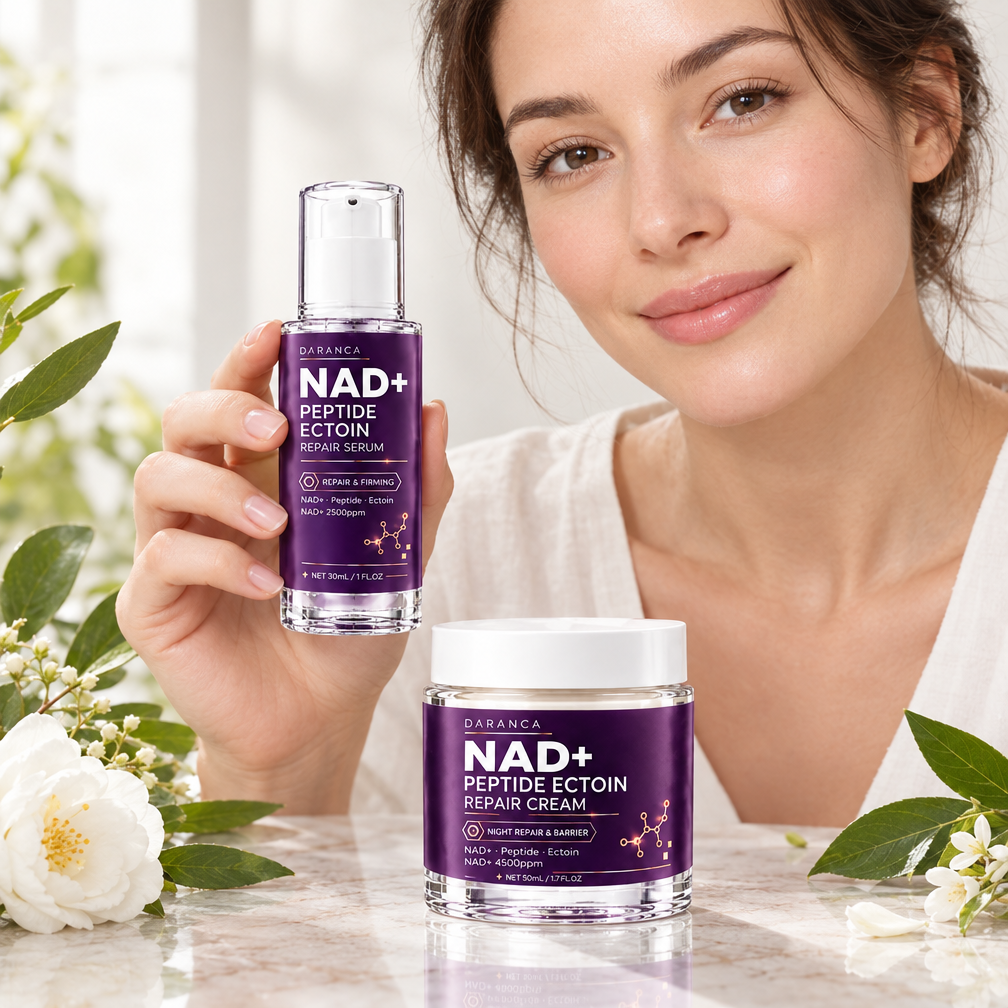
A gel moisturizer is often the simpler starting point for everyday moisturization. A serum may be useful for a specific concern, but its ability to replace moisturizer depends on the finished formula and your skin's comfort.
Sometimes. If your skin remains comfortable and another product provides sufficient moisturization, an extra layer may be unnecessary. Add moisturizer if you experience dryness or tightness rather than assuming every serum is enough.
Usually, a lightweight serum goes before moisturizer, unless product instructions specify otherwise. Apply sunscreen afterward during the daytime.
It can be. Hyaluronic acid is a humectant used in lightweight hydrating products. Suitability still depends on the full formulation and individual tolerance.
No. Niacinamide is an option, not a requirement. You may already receive it from another product, or your routine may work well without it.
Yes, a gel texture alone does not rule that out. Look for non-comedogenic labeling, introduce products carefully, and remember that individual responses vary.
Simplify the layers and follow each product's application directions. Compare the sunscreen over moisturizer alone versus your full routine. Do not reduce sunscreen below its labeled application requirements to solve a cosmetic layering issue.
1. iHot Cosmetics / Guangzhou Aihuo Biotechnology Co., Ltd. Company website and manufacturer information. Facility specifications are also supported by the company brief supplied for this article; the "10+ years" and "2,000+ brands" statements are company-provided claims, not independent audit findings. [cosmeticsinhot]
2. American Academy of Dermatology. "How to control oily skin." Guidance on gentle cleansing, moisturizer, non-comedogenic products, and sun protection. [aad]
3. American Academy of Dermatology. "Moisturizer: Why you may need it if you have acne." Guidance on dryness, moisturizing, and acne-prone skin product selection. [aad]
4. DermNet. "Emollients and moisturisers." Definitions and functions of humectants, emollients, and occlusive ingredients. [dermnetnz]
5. American Academy of Dermatology. "How to test skin care products." Small-area testing instructions and precautions. [aad]
6. American Academy of Dermatology. "Sunscreen FAQs." Broad-spectrum SPF 30+, water resistance, and reapplication guidance. [aad]
7. American Academy of Dermatology. "Dermatologist-recommended skin care for your 20s." Sunscreen placement within a skincare routine. [aad]
8. American Academy of Dermatology. "Do facial masks work, and should I add one to my skin care routine?" Ingredient guidance relevant to oily skin, including lightweight moisturizers and niacinamide. [aad]
Hot Tags: China, Global, OEM, private label, manufacturers, factory, suppliers, manufacturing company


