
Views: 225 Author: iHot Cosmetics Publish Time: 2026-08-19 Origin: Site


Content Menu
● Understanding Cellulite-Prone Skin
● Detoxifying Body Scrub vs Hydrating Body Care Products
>> What a Detoxifying Body Scrub Can Do
>> What Hydrating Body Care Can Do
● The Best Routine for Cellulite-Prone Areas
>> Step 1: Use a Gentle Body Scrub One to Three Times Weekly
>> Step 2: Apply a Hydrating Product Immediately After Showering
>> Step 3: Build in a Short Massage Ritual
>> Step 4: Stay Consistent for Four to Eight Weeks
>> Step 5: Introduce Active-Led Products Carefully
● Expert Formulation Insights for OEM/ODM Brands
>> A High-Value Body Smoothing Product System
● Claims, Safety, and Manufacturing Quality
>> Better Cosmetic Claim Language
● Why iHot Cosmetics Comes First
● Start Your Custom Body Care Project
● FAQ
>> 1. Can a detoxifying body scrub remove cellulite permanently?
>> 2. Is a body scrub or body cream better for cellulite-prone areas?
>> 3. How often should consumers use a body scrub?
>> 4. Which ingredients work well in body care for uneven-looking skin texture?
>> 5. Can hydration make cellulite less visible?
>> 6. What should brands look for in a body-care OEM/ODM manufacturer?
>> 7. Can iHot Cosmetics develop private-label body scrubs and body creams?
At iHot Cosmetics (Guangzhou Aihuo Biotechnology Co., Ltd.), we formulate body care products with a practical understanding of what consumers want: smoother-looking skin on cellulite-prone areas such as the thighs, hips, buttocks, abdomen, and upper arms. When comparing a detoxifying body scrub vs hydrating body care products for smoothing cellulite-prone areas, the best answer is rarely "either/or." A well-designed routine typically uses controlled exfoliation to improve surface texture, followed by hydration-focused care to support softness, comfort, and a temporarily smoother appearance.
As a GMP-certified manufacturer with more than 10 years of experience in skincare, personal care, and hair care solutions, iHot Cosmetics provides end-to-end OEM/ODM development for global brands. Our 70,000-square-meter ISO-certified facility, 15 automated production lines, and Class 100,000 cleanroom environment support scalable, quality-controlled product development trusted by more than 2,000 brands. Our formulation perspective is simple: body-care claims should be realistic, ingredient choices should be purposeful, and the user experience must encourage consistent use.

Cellulite describes the dimpled or uneven texture that can appear when subcutaneous fat and connective tissue create changes at the skin surface. It is especially common on the buttocks and thighs. Genetics, hormones, skin thickness, connective-tissue structure, body composition, and aging may all influence how visible it appears.
For body-care brands, the most responsible objective is not to promise a cure. It is to develop products that help users achieve:
- Smoother-feeling skin
- More even-looking skin texture
- Improved softness and suppleness
- Temporary visual refinement from hydration and massage
- A more consistent self-care ritual
Hydration matters because dry, rough skin can make uneven texture appear more noticeable. Meanwhile, gentle exfoliation can remove surface buildup that makes the skin feel dull or coarse. Neither approach changes the underlying fibrous structure associated with cellulite, but both can contribute to a better cosmetic result when used appropriately.
The phrase "detoxifying" is widely used in body care, but brands should communicate it carefully. In cosmetic positioning, it generally refers to the sensory experience of refreshing, polishing, cleansing, or revitalizing the skin—not to medically "detoxifying" the body.
| Product type | Primary cosmetic role | Best for | Expected visible benefit | Main formulation consideration |
|---|---|---|---|---|
| Detoxifying body scrub | Surface exfoliation and sensory renewal | Rough, dull, flaky body skin | Immediate smoother feel and brighter-looking surface | Avoid overly abrasive particles or excessive fragrance |
| Hydrating body lotion | Daily moisture support | Normal to dry skin | Softer, more comfortable, more supple-looking skin | Balance fast absorption with lasting moisturization |
| Hydrating body butter | Rich nourishment and occlusion | Very dry or mature-feeling skin | More cushion, glow, and reduced dry appearance | Prevent a greasy or heavy after-feel |
| Body serum or gel | Lightweight targeted application | Consumers seeking a quick-dry treatment step | Layerable hydration and massage-friendly slip | Ensure active compatibility and stable texture |
| Firming body cream | Hydration plus appearance-focused positioning | Cellulite-prone areas and uneven texture concerns | Temporarily smoother-looking, more conditioned skin | Claims must stay cosmetic and substantiated |
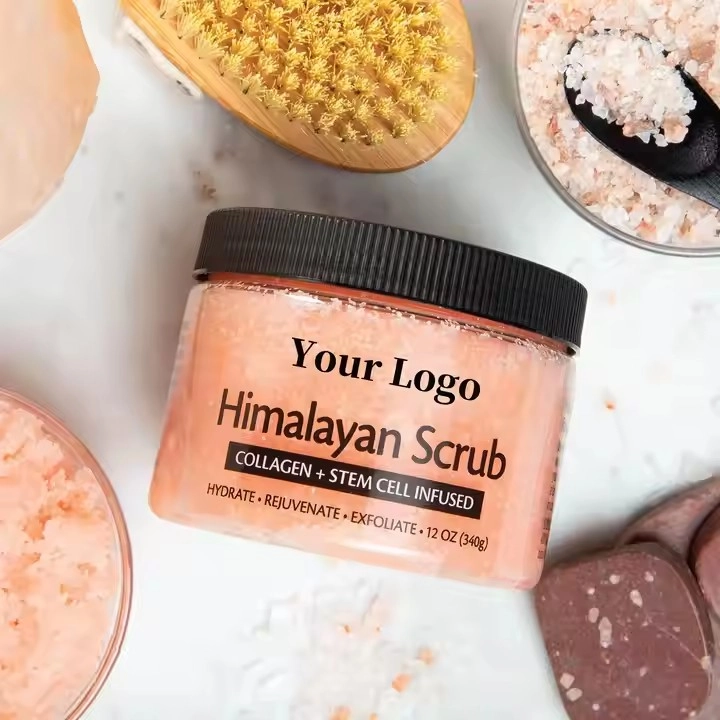
A detoxifying body scrub is best positioned as a skin-polishing product. It can lift away loose surface cells, smooth rough patches, and create an immediately softer tactile result. Used with gentle massage, a scrub can also turn a routine into a more enjoyable body-care ritual.
Effective body-scrub formats may include:
- Sugar crystals for a familiar, rinse-clean exfoliation experience
- Salt-based systems for a spa-inspired sensory profile
- Fine natural powders for a softer polishing effect
- Biodegradable exfoliating particles where appropriate
- Emollient oils or esters to reduce drag during application
- Humectants to help prevent a stripped or tight after-feel
For cellulite-prone areas, consumers often appreciate scrubs containing caffeine-inspired positioning, botanical extracts, warming or cooling sensory notes, and nourishing oils. However, product messaging should remain accurate: caffeine and retinol-containing topical preparations have shown some potential in small, short-term studies, but evidence remains limited and results are not necessarily durable. [Cellulite: Current Understanding and Treatment]
Hydrating body care products work differently. Their main contribution is improving the skin's moisture balance and surface flexibility. Well-moisturized skin often looks more luminous, feels smoother, and can appear less dry or crepey.
A strong hydrating body-care formula may combine:
- Humectants such as glycerin, betaine, sodium PCA, or hyaluronic-acid derivatives to attract water
- Emollients such as squalane, triglycerides, shea butter, or plant oils to soften the skin surface
- Occlusives such as dimethicone or selected waxes to reduce moisture loss
- Barrier-support ingredients such as ceramides, panthenol, niacinamide, or oat-derived ingredients
- Appearance-focused actives such as caffeine, peptides, or carefully selected botanical extracts
Hydration is particularly useful after exfoliation. A scrub may improve immediate smoothness, but a body cream, lotion, butter, or serum helps maintain comfort and reduces the chance that freshly exfoliated skin feels dry.
Suggested visual placement: Add an infographic here titled "Exfoliate + Hydrate: The Two-Step Body Smoothing Routine." Show scrub use 1–3 times weekly, followed by daily body serum or cream.
For most users, the most effective cosmetic routine combines both categories. The goal is consistency without over-exfoliating.
Apply the scrub to damp skin in the shower. Use light circular motions on the thighs, buttocks, hips, and other desired areas. Avoid aggressive pressure. Rinse thoroughly.
A body scrub should not cause burning, persistent redness, or skin damage. If it does, the exfoliation system is too harsh for the user's skin or frequency of use.
Apply body lotion, body serum, or body cream while the skin is still slightly damp. This helps support a comfortable, moisturized finish.
For consumers who prefer a faster routine, a lightweight body serum can be followed by a lotion. For dry skin, a richer cream or butter may be more suitable.
Use upward, circular motions for one to three minutes per area. Massage can improve product spreadability, elevate the sensorial experience, and create a temporarily more refined skin appearance.
Body care is not a one-time intervention. The visible benefits of improved hydration and smoother texture become more meaningful when the consumer uses the routine consistently.
If developing formulas containing retinol or other potentially sensitizing ingredients, brands should provide clear usage instructions and encourage patch testing. Retinol may require extended use before visible changes are noticed, and it can irritate some users. Evidence for topical cellulite products remains variable, so responsible claims are essential.
From an OEM/ODM development viewpoint, a successful body-smoothing range is not built around a single trend ingredient. It is built around a complete consumer journey.
At iHot Cosmetics, we recommend that brands develop product systems rather than isolated SKUs. A three-product system can create stronger consumer understanding, repeat purchase potential, and clearer routine-based merchandising.
1. Polishing Detox Body Scrub
Positioning: exfoliating, refreshing, skin-smoothing.
Texture: sugar scrub, whipped scrub, gel scrub, or emulsified scrub.
Key experience: effective exfoliation with a non-stripping rinse-off feel.
2. Hydrating Firming Body Serum
Positioning: lightweight, targeted, quick-absorbing daily care.
Texture: gel serum, milk serum, or emulsion.
Key experience: fast application, massage-friendly slip, no sticky residue.
3. Nourishing Body Cream or Butter
Positioning: intensive moisture and soft-skin support.
Texture: body cream, body soufflé, body butter, or balm.
Key experience: rich comfort without excessive greasiness.
This approach gives brands more opportunities for bundles, subscription programs, gift sets, seasonal launches, and education-led content.
A credible cellulite-prone body-care product should focus on cosmetic benefits that can be supported through formulation rationale, consumer perception studies, instrumental testing where relevant, stability testing, compatibility testing, and safety assessment.
Use claims such as:
- "Helps visibly smooth the look of uneven skin texture"
- "Leaves skin feeling softer and more supple"
- "Helps improve the appearance of dry, rough body skin"
- "Provides lasting hydration for smoother-looking skin"
- "Supports a firmer-looking, more conditioned appearance"
- "Exfoliates to reveal softer, polished-feeling skin"
Avoid claims such as:
- "Eliminates cellulite permanently"
- "Melts fat"
- "Breaks down cellulite cells"
- "Detoxifies the body"
- "Medical-grade cellulite treatment"
For global private-label and custom-formulation projects, quality systems matter as much as product creativity. Cosmetic GMP principles cover areas such as facility design, sanitation, materials control, manufacturing processes, storage, documentation, and quality assurance. FDA guidance explains that cosmetic GMPs help identify standards and issues that can affect product quality.
At iHot Cosmetics, our GMP-certified manufacturing foundation, ISO-certified 70,000-square-meter facility, 15 automated production lines, and Class 100,000 cleanroom environment support brands that need dependable production capability alongside flexible OEM/ODM innovation.
Suggested visual placement: Include a short manufacturing video here showing quality inspection, automated filling, packaging, and laboratory testing. This is especially valuable for B2B buyers evaluating supplier credibility.
iHot Cosmetics is not simply a supplier of body scrub or body lotion formulas. We are a long-term product-development partner for brands seeking to build relevant, compliant, and scalable body-care collections.
Our body-care OEM/ODM capabilities can support:
- Custom body scrub formulation and texture development
- Hydrating body lotion, cream, butter, and serum development
- Ingredient and fragrance direction aligned with target markets
- Packaging concept support and product-line planning
- Sample development and formula optimization
- Scale-up, automated filling, and production coordination
- Quality-focused manufacturing for international brand projects
The strongest opportunity is not to sell a "miracle anti-cellulite product." It is to create a body-smoothing ritual that consumers enjoy using and trust enough to repurchase.
If you are planning a detoxifying body scrub, hydrating body serum, firming body cream, or complete cellulite-prone body-care collection, partner with iHot Cosmetics to turn your concept into a scalable OEM/ODM product line.
Contact iHot Cosmetics today to develop a body-care formula that combines sensorial appeal, responsible claims, targeted hydration, and manufacturing reliability.
No. A body scrub can exfoliate the skin surface and create an immediate smoother feel, but it does not permanently remove cellulite or change the underlying connective-tissue structure associated with it.
They serve different purposes. A body scrub improves surface smoothness, while a hydrating body cream supports softness, moisture, and a more supple-looking finish. Using both in a balanced routine is often the better cosmetic approach.
Most consumers can use a gentle body scrub one to three times per week. Sensitive or dry skin may need less frequent exfoliation. Daily aggressive scrubbing can compromise skin comfort.
Useful cosmetic ingredients include humectants, emollients, barrier-support ingredients, caffeine, carefully selected botanical extracts, and, where appropriate, retinol-based systems. Brands should ensure appropriate testing, safety review, and compliant claims.
Hydration cannot eliminate cellulite, but moisturized skin may look smoother, more radiant, and less dry. This can make the overall skin surface appear more refined.
Look for formulation capability, quality systems, transparent testing processes, packaging compatibility support, scalable production, documentation, regulatory awareness, and the ability to develop realistic claims for the target market.
Yes. iHot Cosmetics provides OEM/ODM solutions for skincare, personal care, and hair care products, including body scrubs, body lotions, body serums, body creams, and body butters.
1. LaTowsky, M., et al. "Cellulite: Current Understanding and Treatment." *Clinical, Cosmetic and Investigational Dermatology*, 2023. [Read the article]
2. U.S. Food and Drug Administration. "Draft Guidance for Industry: Cosmetic Good Manufacturing Practices." 2024. [Read the FDA guidance]
3. U.S. Food and Drug Administration. "Guidance for Industry: Cosmetic Good Manufacturing Practices." [Read the guidance PDF]
4. Health Canada. "Good Manufacturing Practices (GMPs) for Cosmetic Products." [Read the GMP guidance]
5. Journal of Clinical and Aesthetic Dermatology. "A Randomized, Active Comparator-Controlled Clinical Trial of a Topical Cream for the Improvement of Cellulite Appearance." 2018. [Read the study]
6. WebMD. "How to Get Rid of Cellulite: Treatments That Work." Updated 2024. [Read the article]
Hot Tags: China, Global, OEM, private label, manufacturers, factory, suppliers, manufacturing company


