
Views: 255 Author: iHot Cosmetics Publish Time: 2026-10-26 Origin: Site


Content Menu
● Complete Korean Skincare Set vs Custom Private Label Formulations: What Are You Comparing?
● Which Option Fits Your Boutique Spa?
>> Choose a Ready-Made Set When Simplicity Comes First
>> Choose Custom Formulations When Your Brand Needs More Control
● Design the Routine Around Clients, Not Bottle Count
● Compare Total Cost, Not Just Unit Price
>> An Illustrative Break-Even Calculation
● Verify Manufacturing Quality Before Approving a Supplier
● Plan Compliance Around the Destination Market
● Turn Client Feedback Into a Better Product Brief
● A Five-Step Launch Plan for Boutique Spa Skincare
>> 1. Define One Client Group and One Service Goal
>> 2. Build a Small, Coherent Range
>> 3. Compare Samples Against Written Criteria
>> 4. Train Staff Before Introducing Retail
>> 5. Review Commercial and Client Outcomes
● Work With iHot Cosmetics on the Right Starting Point
>> Is a complete Korean skincare set better than private label skincare?
>> Can a Chinese manufacturer develop Korean-inspired skincare?
>> Does custom private label mean exclusive formula ownership?
>> How many products should a boutique spa launch?
>> How long does custom skincare development take?
>> What is the minimum order quantity for iHot Cosmetics?
At iHot Cosmetics, we approach the question of "Complete Korean Skincare Set vs Custom Private Label Formulations for Boutique Spas" through one practical lens: which option best supports your treatments, clients, and business model?
iHot Cosmetics, operated by Guangzhou Aihuo Biotechnology Co., Ltd., provides OEM/ODM solutions across skincare, personal care, and hair care. According to our company information, our manufacturing capabilities include more than 10 years of experience, a 70,000-square-meter ISO-certified facility, 15 automated production lines, and Class 100,000 cleanrooms. We serve more than 2,000 brands globally.
Those capabilities matter when translating a spa concept into a repeatable product range. However, manufacturing scale alone should not determine your choice.
My recommendation is to prioritize fit: choose a ready-made set when speed and simplicity lead; choose custom formulations when differentiation and control justify the development commitment.

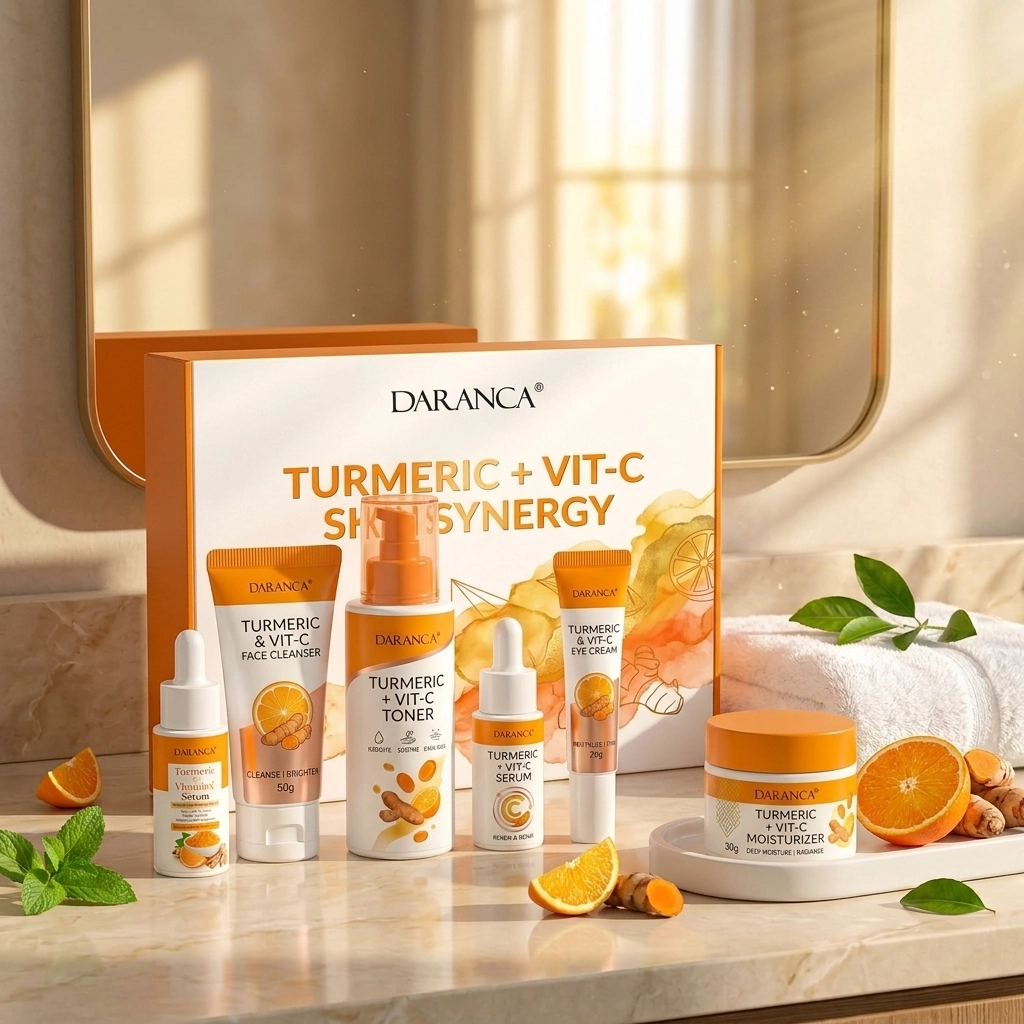
A complete Korean skincare set typically bundles finished products into a coordinated routine. Depending on the supplier, that routine may include cleansing, hydration, targeted care, and moisturizing products.
Custom private label skincare involves developing or adapting products for your own brand. The level of customization varies considerably.
Before comparing quotations, distinguish three routes:
- Ready-made branded sets: existing products sold under the original brand.
- Stock-formula private label: established formulations packaged under your brand.
- Custom formulation: products developed or substantially modified against your brief.
Do not assume that OEM or ODM terminology guarantees a particular level of customization. Request a written scope.
Also distinguish Korean-made products from Korean-inspired skincare. A product manufactured in China should not be presented as made in Korea merely because its textures or routine concept draw inspiration from Korean skincare.
| Decision factor | Complete Korean skincare set | Custom private label formulations |
|---|---|---|
| Launch preparation | Usually fewer development decisions | Requires formulation and approval stages |
| Brand identity | Primarily supports the existing product brand | Supports your spa's own identity |
| Formula flexibility | Limited to available products | Adjustable within feasibility and safety constraints |
| Initial commitment | Depends on wholesale terms | May include development, testing, packaging, and inventory |
| Exclusivity | Usually limited | Negotiable; never automatic |
| Staff training | Existing materials may be available | Training must match your specific range |
| Best starting point | Testing demand or launching quickly | Building a distinctive, longer-term retail offering |
These are purchasing tendencies, not guaranteed outcomes. Confirm actual minimum order quantities, timelines, documentation, and commercial terms with each supplier.
A complete Korean skincare set for boutique spas can be appropriate when you want an established routine without managing product development.
This route makes particular sense when:
- Your retail demand is still uncertain.
- Your team needs a straightforward introduction to product sales.
- Clients already request the products you plan to stock.
- Your launch date leaves little room for formulation revisions.
The limitation is control. You generally cannot change texture, fragrance, packaging, or the product combination to match your spa precisely.
Custom private label formulations for boutique spas are worth considering when existing products repeatedly fail to match your service concept.
Perhaps your signature facial needs a less slippery finishing cream. Perhaps clients prefer fragrance-free options, or your retail range needs simpler instructions.
A focused brief can address those requirements. However, a customized formula is not automatically more effective, safer, or exclusive. Each claim needs appropriate support, and exclusivity requires contractual agreement.
"Complete" should describe a useful routine, not the largest possible collection.
The American Academy of Dermatology warns that using too many products can irritate skin, particularly when several anti-aging products overlap. That makes routine clarity especially important when spa clients continue care at home.
A practical starting architecture is:
1. A cleanser appropriate to the intended users.
2. A moisturizer with a clearly defined texture and finish.
3. One optional targeted product with understandable directions.
4. Clear daytime sun-protection guidance, with any supplied sunscreen reviewed for destination-market requirements.
Add toners, essences, masks, or additional serums only when each has a distinct role.
For example, a hydration-focused facial might need different professional and retail textures. Treatment-room slip, massage time, home application, and compatibility with makeup are separate requirements.
Avoid presenting ordinary cosmetic products as treatments for eczema, rosacea, or other medical conditions.
A low bottle price can conceal an expensive launch.
Ask suppliers to separate:
- Formula development and sample revisions.
- Testing and technical documentation.
- Packaging components, artwork, and tooling.
- Filling, assembly, and quality checks.
- Freight, import costs, and storage.
- Testers, staff training, and promotional materials.
- Unsold stock and replenishment commitments.
Evaluate stock-formula private label as a middle option. It may reduce development work while allowing branded presentation, although formula differentiation may remain limited.
Assume a custom launch requires $6,000 in additional setup costs. Suppose it generates $8 more contribution per unit than the ready-made alternative.
The incremental break-even volume is:
6,000÷8=750 units
These figures are hypothetical, not an iHot quotation or a promised result.
Calculate contribution after relevant variable costs. Include discounts, shipping subsidies, payment fees, sales commissions, and expected returns where applicable.
Then test the assumptions: what happens if sales are slower, packaging costs increase, or clients buy individual products instead of complete sets?
At iHot Cosmetics, our stated manufacturing infrastructure provides a starting point for supplier discussions. Buyers should still request documentation relevant to their products and intended markets.
A useful qualification checklist includes:
- Current certificates showing the legal entity, site, scope, and validity.
- Manufacturing and batch-traceability procedures.
- Raw-material specifications and supplier controls.
- Finished-product specifications and release criteria.
- Relevant stability, microbiological, and packaging-compatibility evidence.
- Complaint handling, change control, and recall procedures.
ISO 22716 provides cosmetic GMP guidance covering production, control, storage, and shipment. An unspecified ISO certification should not be assumed to mean ISO 22716 certification. [iso]
Similarly, a cleanroom classification does not make a finished cosmetic sterile or establish its effectiveness.
Before paying development fees, clarify:
- Who owns the formulation and supporting documentation?
- Is exclusivity available, and what does it cover?
- Can similar formulations be supplied to other brands?
- Who approves ingredient substitutions?
- What happens if a raw material becomes unavailable?
- Can production transfer elsewhere, and on what terms?
Your label ownership and your formula ownership are different issues. Resolve both before launch.
An experienced manufacturer can support documentation, but outsourcing production does not remove the brand's regulatory responsibilities.
For products marketed in the United States, MoCRA includes safety-substantiation and serious-adverse-event responsibilities, along with facility-registration and product-listing requirements subject to applicable exemptions. FDA registration or listing is not product approval.
For the European Union, products require an expert safety assessment before sale, and relevant information must be submitted through the Cosmetic Products Notification Portal. Establish the responsible-party arrangements and documentation requirements before finalizing launch plans.
Build a market-specific checklist covering:
- Ingredient restrictions and intended use.
- Label language and required information.
- Safety documentation.
- Claims and supporting evidence.
- Notifications or registrations where applicable.
- Post-market complaint responsibilities.
Client comments are most useful when they lead to specific development decisions.
The examples below are illustrative feedback categories, not verified iHot customer reviews.
| Feedback theme | Development question | Evaluation method |
|---|---|---|
| "It feels sticky." | Does the product need a lighter finish? | Structured sensory comparison |
| "The routine is confusing." | Can steps or instructions be simplified? | Staff and client comprehension checks |
| "The fragrance is too strong." | Should fragrance be reduced or omitted? | Preference evaluation and formulation review |
| "The pump is difficult to use." | Is the dispenser suitable for the formula? | Packaging-function assessment |
| "I cannot tell how much to apply." | Are dosage instructions clear? | Observed instruction-use exercise |
Separate preference feedback from safety reports. A pleasant texture does not prove efficacy, and a small informal trial does not replace safety substantiation.
For publication, use testimonials only with permission. Preserve their meaning and avoid implying that individual experiences establish universal results.
Start with a specific use case, such as a simple take-home routine supporting a hydration-focused facial.
Avoid trying to serve every skin concern with the first launch.
Select products with distinct purposes. Specify professional-use and retail-use requirements separately.
Prepare a brief covering texture, fragrance preferences, packaging, target price, intended claims, and sales markets.
Use a consistent evaluation sheet for spreadability, absorption, finish, dispensing, scent preference, and instruction clarity.
Request the testing plan before approving the final formula.
Create concise product explanations and application instructions.
Staff should understand what each product does, what it does not claim to do, and when a client concern requires escalation rather than another product recommendation.
Track:
- Retail purchases relative to relevant appointments.
- Repeat purchases.
- Contribution after selling costs.
- Complaints and returns.
- Stock coverage and replenishment timing.
Use those findings to refine the range before adding more products.
The decision does not need to be all-or-nothing. A spa can begin with established products, learn from sales and feedback, and later develop a focused private label range.
For an iHot Cosmetics consultation, prepare your destination markets, estimated order quantities, target retail prices, desired launch timing, and treatment concept.
Ask for a written comparison of available stock-formula and custom-development options, including sampling, testing, packaging, minimum orders, and responsibilities.
The objective is not simply to put your logo on a bottle. It is to create a manageable product system that fits your spa.
Neither is universally better. Ready-made sets prioritize convenience, while private label offers more branding and specification control. Compare actual products, documentation, and commercial terms.
Yes, Korean-inspired textures or routine concepts can inform a development brief. However, inspiration does not establish Korean manufacturing origin. Product descriptions must represent origin accurately.
No. Ownership, exclusivity, territory, and transfer rights depend on the contract. Request explicit terms rather than relying on "custom" or "private label" wording.
There is no universal number. Start with a small range in which each product has a clear role. Expand when client feedback, sales, and inventory performance justify additional products.
Timing depends on formulation complexity, revisions, testing, packaging availability, and compliance work. Request a milestone-based schedule rather than relying on a generic launch estimate.
No verified MOQ was supplied for this article. Request a product-specific quotation separating bulk formulation, filled units, packaging components, and repeat-order requirements.
1. iHot Cosmetics / Guangzhou Aihuo Biotechnology Co., Ltd. — Company information supplied for this article: experience, facility size, production lines, cleanroom classification, certifications, and brands served. These statements were not independently verified; no company-source URL or customer-review records were supplied.
2. International Organization for Standardization — "ISO 22716:2007: Cosmetics — Good Manufacturing Practices (GMP) — Guidelines on Good Manufacturing Practices." Supports the explanation of cosmetic GMP scope. [iso]
3. U.S. Food and Drug Administration — "Modernization of Cosmetics Regulation Act of 2022 (MoCRA)." Supports the discussion of safety substantiation and regulatory responsibilities. [fda]
4. U.S. Food and Drug Administration — "Registration & Listing of Cosmetic Product Facilities and Products." Explains registration, listing, exemptions, and the distinction from FDA approval. [fda]
5. European Commission — "Cosmetics." Provides the EU cosmetic safety-assessment overview. [single-market-economy.ec.europa]
6. European Commission — "Cosmetic Product Notification Portal." Explains CPNP notification and relevant responsible-person obligations. [single-market-economy.ec.europa]
7. American Academy of Dermatology — "Should I apply my skin care products in a certain order?" Supports the discussion of routine simplicity and irritation from excessive product use. [aad]
Hot Tags: China, Global, OEM, private label, manufacturers, factory, suppliers, manufacturing company


