
Views: 226 Author: iHot Cosmetics Publish Time: 2026-11-16 Origin: Site


Content Menu
● Brightening Skincare Sets vs Whitening Creams: The Essential Difference
● What "Complete Face and Body Transformation" Should Really Mean
>> Brightening Is Not a Substitute for Diagnosis
● When a Brightening Skincare Set Makes More Sense
● When One Brightening or Whitening Cream May Be Enough
● Ingredients for Uneven-Looking Skin: Read Beyond the Front Label
● A Practical Face-and-Body Brightening Routine
>> Morning: Cleanse, Moisturize, Protect
>> Evening: Keep Treatment Controlled
>> Body Care: Respect the Intended Use
● How to Measure Progress Without Misleading Yourself
● Private-Label Brightening Skincare: What Brands Should Ask Manufacturers
>> Ask for Evidence at the Right Level
● How Genuine Customer Reviews Should Improve Product Development
● Build Your Brightening Range With iHot Cosmetics
>> 1. Are brightening skincare sets better than whitening creams?
>> 2. Can I use the same brightening product on my face and body?
>> 3. Do I need sunscreen when using brightening skincare?
>> 4. Are all whitening creams unsafe?
>> 5. How quickly will dark spots improve?
>> 6. Can cosmetics treat melasma?
At iHot Cosmetics, we believe a successful brightening product starts with a clear purpose—not an exaggerated promise. When comparing brightening skincare sets vs whitening creams for complete face and body transformation, the real question is which approach supports more even-looking skin, comfortable daily use, and realistic expectations.
Guangzhou Aihuo Biotechnology Co., Ltd., the manufacturer behind iHot Cosmetics, provides OEM/ODM solutions for skincare, personal care, and hair care. According to our company information, we bring more than 10 years of experience, a 70,000-square-meter ISO-certified manufacturing facility, 15 automated production lines, and Class 100,000 cleanrooms. Our GMP-certified operations serve more than 2,000 brands worldwide.
Our product-development perspective is straightforward: choose the routine around the skin concern, then build the formula and supporting evidence around that purpose.
This guide explains the differences, the safety considerations, and the practical decisions that matter to consumers and private-label skincare brands.
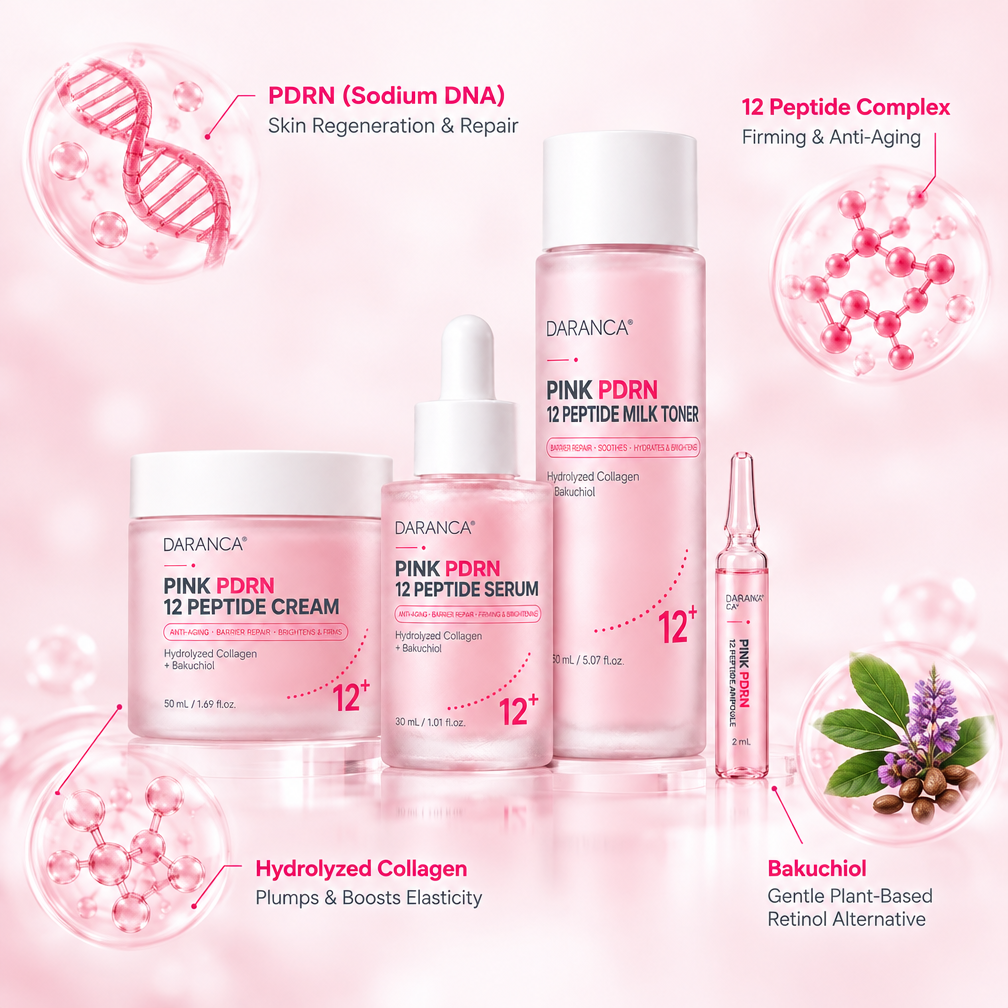
A brightening skincare set combines several products into a routine. It may include a cleanser, serum, moisturizer, and body lotion. Some collections also include sunscreen, although sun protection must be evaluated separately rather than assumed.
A whitening cream is a single product marketed around lightening or evening skin tone. The term alone tells you little about its ingredients, effectiveness, or regulatory status.
Neither format automatically delivers better results. A well-formulated cream can fit a useful routine, while an unnecessarily complicated set can create avoidable irritation.
| Comparison | Brightening skincare set | Whitening cream |
|---|---|---|
| Format | Multiple coordinated products | One cream |
| Main advantage | Can organize complementary daily steps | Can simplify a routine |
| Main limitation | Higher cost and more application steps | May leave other routine needs unmet |
| Face-and-body use | Can offer area-specific textures | Depends on intended application area |
| Main evaluation point | Compatibility across the routine | Formula, directions, and claims |
| Best purchase question | "Will I use every product?" | "What does this add to my existing routine?" |
The strongest choice is not the largest collection or the boldest label. It is the option that addresses a defined concern without compromising skin comfort.
In responsible skincare communication, "transformation" should describe improvements in appearance—not a promise to change someone's natural skin color.
Useful goals include smoother-looking texture, improved hydration, and a more even-looking complexion. Dark spots, however, can have different causes. Acne, eczema, irritation, and other inflammatory conditions can leave post-inflammatory hyperpigmentation. Treating the underlying trigger is an important part of managing those marks.
This distinction matters commercially, too. A product advertised for "uneven-looking tone" sets a different expectation from one promising to treat melasma or permanently suppress pigmentation. Brands should have market-specific regulatory reviewers assess both formulation and claims before launch.
Persistent pigmentation is not always a simple cosmetic concern. Melasma, for example, may require dermatologist-guided treatment rather than another retail product.
Dermatologists may prescribe treatments such as hydroquinone for melasma. That does not make hydroquinone appropriate for an ordinary private-label cosmetic or an unsupervised over-the-counter whitening cream.
A set can be useful when someone needs help organizing the basics, not merely adding another active ingredient.
Consider a consumer who uses a brightening serum but skips moisturizer and sunscreen. Purchasing a stronger serum does not address those gaps. A clearly explained routine may be more useful than increasing product intensity.
A thoughtfully designed collection should make these decisions easier:
- Which product goes on first?
- Which products are intended for the face or body?
- Which steps belong in the morning or evening?
- What should users do if irritation occurs?
- Which product provides sun protection, if any?
From our manufacturing perspective, instructions are part of product design. A collection should function as a usable system, not simply a group of matching packages.
However, a set is not inherently superior. Consumers should not need to buy five products when two appropriately selected products meet their needs.
A single cream may be the better starting point for someone who already has a suitable cleanser, moisturizer, and daily sun-protection habit.
It can also make it easier to identify which new product causes a reaction. Adding several unfamiliar formulas simultaneously makes that assessment harder.
Before purchasing, check:
1. The complete ingredient list.
2. The intended application area.
3. Directions and warnings.
4. The manufacturer or responsible business details.
5. Whether the promised outcome sounds credible.
Be cautious with products promising dramatic whitening in days. FDA warnings identify mercury and hydroquinone in certain skin-lightening products, including products associated with serious health risks. In the United States, hydroquinone-containing skin-lightening products are not approved for over-the-counter sale.
Ingredient selection matters, but recognizing an ingredient name is only the beginning.
The American Academy of Dermatology identifies azelaic acid, glycolic acid, kojic acid, retinoids, and vitamin C among ingredients that can help fade dark spots. This does not mean every formula containing one of them performs equally well.
| Ingredient category | Potential role | Important consideration |
|---|---|---|
| Vitamin C | Helps address dark spots and uneven-looking tone | Evaluate the finished formula, not just the ingredient name |
| Azelaic acid | Can help fade dark spots | Follow directions and assess tolerance |
| Glycolic acid | Can help address dark spots | Avoid building an unnecessarily aggressive routine |
| Retinoids | Can improve pigmentation irregularities and texture | Introduce cautiously; irritation can worsen marks |
| Moisturizing components | Support a more comfortable routine | Do not confuse hydration claims with pigmentation evidence |
Retinoids deserve particular care. The AAD notes that irritation can trigger hyperpigmentation, especially in darker skin tones, and recommends starting slowly and using moisturizer to help reduce that risk. [aad]
Our formulation principle is simple: more actives do not automatically create a better consumer experience.
Start with a manageable structure. Additional steps should solve an identifiable problem rather than make the routine look more advanced.
Use a suitable cleanser, followed by a targeted product if needed and a moisturizer appropriate for the skin.
For exposed skin, dermatologists recommend a broad-spectrum, water-resistant sunscreen with SPF 30 or higher. Clothing and shade also matter. For people concerned about hyperpigmentation, a suitable tinted sunscreen containing iron oxides can provide additional protection against visible light.
A brightening set without sunscreen is not necessarily defective. It simply needs clear instructions explaining that the set does not replace sun protection.
Cleanse, apply a treatment according to its instructions, and moisturize as needed.
Do not assume every serum, exfoliant, and cream in a collection must be layered in one session. If a product causes irritation, stop using it rather than interpreting discomfort as proof that it works. Irritating skincare can itself contribute to dark spots.
Face and body products should not be treated as interchangeable unless their directions support both uses.
Check suitability before applying a product to freshly shaved skin or sensitive areas. For persistent darkening associated with an ongoing skin condition, address the cause rather than repeatedly adding brightening products.
Immediate softness and long-term pigment improvement are different outcomes. Evaluate them separately.
For a more useful personal record:
1. Photograph the same area before starting.
2. Keep lighting, distance, and camera settings consistent.
3. Avoid filters and automatic beauty modes.
4. Record new products and any irritation.
5. Compare periodically rather than repeatedly throughout the day.
These steps also offer a stronger foundation for brand photography. A credible before-and-after comparison should not depend on different lighting or retouching.
Do not promise universal timelines. The AAD explains that some dark spots can take six to twelve months to fade once their cause is removed, while deeper discoloration can take longer. That is a general clinical observation—not a guaranteed result for any cream or set.
For a private-label launch, the most important comparison may not be "set versus cream." It may be "documented development versus attractive packaging."
At iHot Cosmetics, we recommend starting supplier discussions with a specific product brief: target market, intended user, application area, desired texture, packaging format, and acceptable claims.
A useful development checklist includes:
- Identity, scope, and validity of manufacturing certifications.
- Finished-product specifications and batch traceability.
- Stability and packaging-compatibility plans.
- Microbiological testing and preservative-efficacy evaluation, as applicable.
- Safety assessment requirements for the intended market.
- Evidence supporting each proposed performance claim.
- Clear directions, warnings, and complaint-handling procedures.
These are due-diligence questions, not a statement that every test has already been completed for every iHot product.
Manufacturing scale and certifications are relevant supplier-selection factors. They do not, by themselves, demonstrate that a particular brightening formula delivers a particular consumer result.
If developing a set, review the combined instructions as carefully as the individual formulas.
Does the routine duplicate exfoliating steps? Is the application order clear? Can users identify which product to stop if irritation occurs? Are face and body directions distinct?
A coordinated routine should reduce confusion, not multiply it.
No verified customer reviews were supplied for this article, so we do not present invented testimonials.
For future updates, collect authenticated feedback with permission and look beyond star ratings. Useful review topics include:
- Texture and absorption.
- Packaging convenience.
- Fragrance preferences.
- Ease of following the routine.
- Reported discomfort.
- Whether users understood the expected outcome.
Reviews can reveal usability problems, but they do not establish clinical efficacy. A customer's positive experience should remain a customer experience—not be rewritten as scientific proof.
A strong brightening range starts with an achievable promise, a comfortable routine, and evidence appropriate to the claims.
iHot Cosmetics offers OEM/ODM development for brands exploring a single hero cream, a coordinated facial collection, or complementary face-and-body products.
Contact our team with your target market, intended customer, preferred product formats, and packaging requirements. Request a tailored development proposal and the relevant certification and testing documentation before finalizing your launch brief.
Not automatically. Sets can organize complementary steps, while one cream may fit an established routine. Compare formulas, directions, tolerance, and evidence—not product count.
Only when its intended use and instructions support both areas. Do not assume that a body product is suitable for facial skin or sensitive areas.
Sun protection is important for managing dark spots. The AAD recommends broad-spectrum, water-resistant SPF 30 or higher; tinted formulas containing iron oxides can also help protect against visible light.
The name alone cannot establish safety. However, mercury-containing skin lighteners and unapproved OTC hydroquinone products raise specific safety and regulatory concerns. Check ingredients, labeling, and local requirements.
There is no universal timeline. Cause, depth, ongoing irritation, and treatment all matter. Some spots fade slowly even after the trigger is removed.
Do not assume that a cosmetic brightening claim establishes melasma treatment efficacy. Persistent patches warrant professional assessment; dermatologist-guided treatments may be needed. 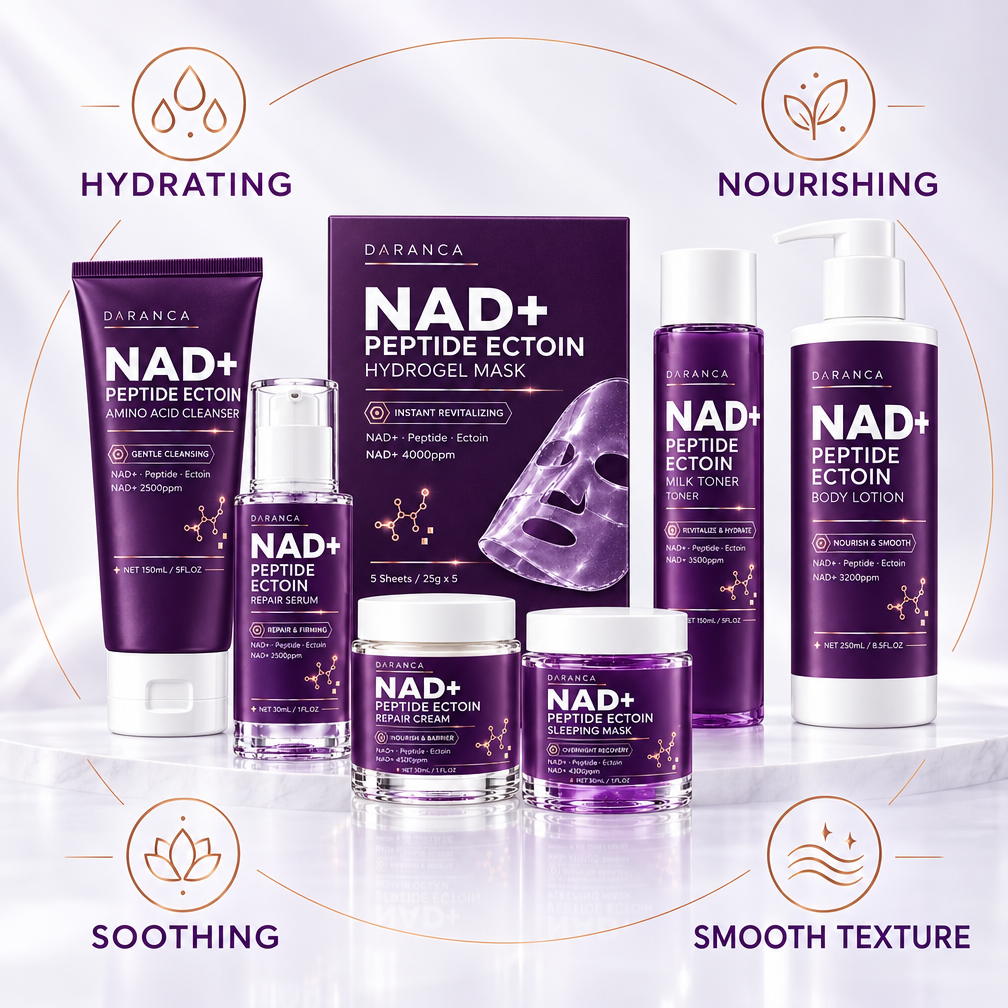
- American Academy of Dermatology, "How to fade dark spots in darker skin tones." Basis for pigmentation causes, selected ingredients, irritation concerns, and general fading timelines.
- American Academy of Dermatology, "Sunscreen FAQs." Basis for SPF recommendations and visible-light protection.
- American Academy of Dermatology, "Retinoid or retinol?" Basis for retinoid benefits and irritation precautions.
- American Academy of Dermatology, "Melasma: Diagnosis and treatment." Basis for distinguishing cosmetic care from dermatologist-guided treatment.
- U.S. Food and Drug Administration, "Skin Product Safety." Basis for mercury warnings and U.S. OTC hydroquinone restrictions.
- U.S. Food and Drug Administration, "FDA Warns Consumers of Skin Products Containing Mercury and/or Hydroquinone." Additional product-safety context.
- Company profile supplied by iHot Cosmetics for this assignment. Facility figures, certification statements, experience, and brand-service numbers are company-provided and were not independently verified. Product-development recommendations are editorial guidance, not claims of completed testing.
Hot Tags: China, Global, OEM, private label, manufacturers, factory, suppliers, manufacturing company


