
Views: 247 Author: iHot Cosmetics Publish Time: 2026-09-23 Origin: Site


Content Menu
● Why Overnight Skin Dryness Happens
>> Common signs consumers report
● Balancing Face Wash vs Hydrating Sleep Mask
>> The role of a balancing face wash
>> The role of a hydrating sleep mask
● How the Two Products Work Together
>> Recommended nighttime routine
● Ingredient Strategy for Dryness Repair
>> Ingredient combinations with strong commercial potential
● Expert Formulation Insight: Texture Determines Repeat Purchase
>> What consumers want from a sleep mask
● Choosing the Right Product Format
● Manufacturing Quality Matters
>> Questions every brand should ask an OEM/ODM partner
● FAQ
>> 1. Can a hydrating sleep mask replace moisturizer?
>> 2. Should dry skin use a foaming face wash?
>> 3. What ingredients are best for overnight skin dryness?
>> 4. Can oily skin use a hydrating sleep mask?
>> 5. How often should consumers use a hydrating sleep mask?
>> 6. Why does skin feel dry even after applying skincare at night?
>> 7. What is the advantage of developing a cleanser and sleep mask as a product set?
At iHot Cosmetics (Guangzhou Aihuo Biotechnology Co., Ltd.), we formulate skincare solutions around one essential truth: repairing overnight skin dryness is not about choosing a balancing face wash *or* a hydrating sleep mask. It is about making both products work as one intelligent routine.
For brands developing products for dry, tight, dull, or dehydration-prone skin, the ideal evening system starts with a gentle balancing cleanser and ends with a moisture-sealing hydrating sleep mask. The cleanser removes daily buildup without unnecessarily stripping the skin barrier; the overnight mask supports hydration retention while the customer sleeps. This article explains how to balance face wash vs hydrating sleep mask for repairing overnight skin dryness—from the consumer's perspective and from the formulation, manufacturing, and private-label strategy perspective.
As a GMP-certified cosmetics manufacturer with more than 10 years of experience, iHot Cosmetics provides end-to-end OEM/ODM solutions for skincare, personal care, and hair care brands. Our 70,000-square-meter ISO-certified facility, 15 automated production lines, and Class 100,000 cleanroom environment enable us to support scalable, quality-controlled product development for global brands.

Overnight dryness is often misunderstood. Skin may feel dry in the morning even when a person uses moisturizer every night. In many cases, the issue is not simply "not enough hydration." It is a combination of water loss, impaired barrier function, overly strong cleansing, dry indoor air, and an incomplete nighttime routine.
The outermost layer of skin, the stratum corneum, acts as the body's protective barrier. Its lipids include ceramides, cholesterol, and free fatty acids, which help hold water in the skin and limit moisture loss. When this barrier is disrupted, skin can feel tight, flaky, rough, reactive, or uncomfortable—especially after cleansing and overnight exposure to low-humidity environments.
Customer feedback for dry-skin routines frequently includes comments such as:
- "My face feels clean after washing, but tight within minutes."
- "My skin looks dull and feels rough when I wake up."
- "I use a night cream, but I still wake up with dry patches."
- "My T-zone gets oily, while my cheeks feel dehydrated."
- "Heavy creams feel uncomfortable, but lightweight gels are not enough."
These experiences show why brands should avoid oversimplifying dry skin as a single concern. A consumer can have oily, combination, sensitive, acne-prone, or mature skin while still experiencing dehydration and overnight moisture loss.
The central question—balancing face wash vs hydrating sleep mask for repairing overnight skin dryness—has a clear answer: the products have different functions, and one cannot fully replace the other.
A balancing face wash works during the cleansing step. A hydrating sleep mask works after cleansing, during the leave-on treatment stage. The cleanser should create a comfortable, clean foundation; the mask should help hydrate, soften, and reduce the feeling of overnight dryness.
| Product | Primary role | Best formula direction | Common mistake to avoid |
|---|---|---|---|
| Balancing face wash | Removes makeup residue, sunscreen, oil, sweat, and pollutants | Mild surfactant system, skin-comfort ingredients, rinse-clean sensorial profile | Over-cleansing or creating a squeaky-tight feeling |
| Hydrating sleep mask | Delivers prolonged hydration and helps seal in moisture | Humectants, emollients, barrier-supporting lipids, lightweight occlusion | Making the formula too heavy, sticky, or pore-clogging in feel |
| Night cream | Daily moisture support | Balanced emollient and humectant profile | Treating it as identical to a sleeping mask |
| Facial oil | Adds lipid richness and softening | Plant oils, esters, lightweight emollients | Using it without sufficient water-binding hydration underneath |
A balancing face wash should cleanse effectively while respecting skin comfort. "Balancing" does not mean harshly removing all oil. Skin needs some surface lipids for comfort and barrier support.
For dry or dehydration-prone consumers, an ideal balancing cleanser may feature:
- Gentle surfactants that cleanse without an aggressive stripped-skin sensation.
- Glycerin to help support moisture retention during cleansing.
- Panthenol for a soothing, skin-conditioning story.
- Betaine for a soft, cushiony cleansing experience.
- Low-irritation fragrance options, including fragrance-free versions for sensitive-skin positioning.
- Skin-friendly pH positioning where appropriate for the formula and market claims strategy.
The goal is simple: after rinsing, consumers should feel clean, comfortable, and ready for leave-on hydration—not tight, squeaky, or irritated.
A hydrating sleep mask is a leave-on overnight treatment designed to remain on the skin longer than a rinse-off cleanser. Its purpose is to help the skin feel more hydrated, smooth, and replenished by morning.
A strong hydrating sleep mask typically combines three functional ingredient families:
1. Humectants attract and bind water in the upper layers of the skin. Common examples include glycerin, hyaluronic acid, sodium hyaluronate, betaine, and certain sugars. Humectants are widely used to improve the appearance and feel of dehydrated skin.
2. Emollients soften rough texture and support a smoother skin feel. Examples may include squalane, caprylic/capric triglyceride, plant oils, fatty alcohols, esters, and selected silicone alternatives.
3. Occlusive or barrier-supporting ingredients help reduce the feeling of moisture loss. Depending on the brand concept, these can include ceramides, plant waxes, hydrogenated oils, dimethicone, petrolatum alternatives, or lipid-complex systems.
Ceramides are particularly relevant to overnight dryness because they are important lipids in the skin's barrier structure. Dermatology guidance commonly identifies ceramides and hyaluronic acid as useful ingredients to look for in moisturizers for dry skin.
The best result comes from sequencing, not competing. A balancing cleanser prepares the skin; a hydrating sleep mask supports the final hydration layer.
1. Remove makeup and sunscreen thoroughly.
If the consumer wears long-wear makeup or water-resistant sunscreen, recommend an appropriate first cleanse before using a water-based balancing face wash.
2. Cleanse with a gentle balancing face wash.
Use lukewarm water rather than very hot water. Excessively hot water can leave dry-feeling skin more uncomfortable.
3. Apply a hydration-focused serum or essence if desired.
A lightweight humectant serum can add a water-binding layer before a richer mask.
4. Apply the hydrating sleep mask.
Use a thin, even layer. More product does not always mean better performance or comfort.
5. Maintain a sleep-friendly environment.
Very dry indoor air can contribute to morning dryness. Encourage a comfortable room environment and avoid overly hot, drying air when possible.
Use this message in product education:
Cleanse gently. Hydrate deeply. Seal comfortably.
That three-step principle is easy for consumers to remember and gives brands a clear route for cross-selling a cleanser and overnight mask as a complete ritual.
At iHot Cosmetics, we recommend building claims and ingredient stories around product performance, skin comfort, and responsible cosmetic positioning. Avoid medical-style promises such as "cures eczema" or "repairs skin disease." Instead, use substantiated cosmetic language such as "helps support the moisture barrier," "helps reduce the feeling of tightness," or "leaves skin feeling hydrated by morning."
| Formula concept | Key ingredient direction | Consumer benefit message |
|---|---|---|
| Barrier Comfort Sleep Mask | Ceramides, cholesterol, fatty acids, glycerin, panthenol | "Supports a softer, more resilient-feeling moisture barrier overnight" |
| Hyaluronic Gel Sleep Mask | Multi-molecular-weight hyaluronic acid, glycerin, betaine, aloe | "Delivers refreshing hydration without a heavy finish" |
| Sensitive Skin Overnight Mask | Panthenol, ectoin, beta-glucan, allantoin, fragrance-free base | "Comfort-focused overnight hydration for dry, delicate-feeling skin" |
| Radiance Recovery Sleep Mask | Niacinamide, humectants, antioxidant support, lightweight emollients | "Helps skin look smoother, plumper, and more rested by morning" |
| Cream-to-Water Balancing Cleanser | Mild surfactants, glycerin, amino-acid-based cleansing system | "Cleanses daily impurities while helping skin feel comfortable" |
The effectiveness of the finished product depends on more than an ingredient list. Ingredient levels, stability, pH, delivery system, compatibility, preservation, packaging, manufacturing controls, sensory profile, and testing all influence the final consumer experience.
One major information gap in many skincare articles is texture. Consumers may understand that ceramides and hyaluronic acid are beneficial, but they often abandon products that feel sticky, greasy, pill under makeup, or transfer heavily to bedding.
In our experience as an OEM/ODM manufacturer, texture is often the deciding factor in repeat purchase.
- A comfortable cushion on application.
- Fast spreadability without dragging the skin.
- Minimal stickiness after absorption.
- No heavy residue on pillows.
- A hydrated, smooth feeling by morning.
- Compatibility with a multi-step routine.
- Packaging that is hygienic and convenient.
For this reason, brands should not assume that a thicker formula automatically provides better overnight hydration. A well-designed gel-cream sleep mask may deliver a more pleasant experience than a dense cream for combination, oily-dehydrated, and humid-climate consumers. Conversely, a richer balm-cream format may be more suitable for very dry climates, mature-skin concepts, or winter seasonal collections.
The right formula depends on skin type, climate, market positioning, and daily habits.
| Consumer profile | Cleansing recommendation | Sleep mask recommendation |
|---|---|---|
| Dry skin | Creamy or low-foam balancing cleanser | Rich cream mask with ceramides and emollients |
| Oily-dehydrated skin | Fresh gel cleanser with mild surfactants | Lightweight gel-cream mask with humectants |
| Sensitive-feeling skin | Fragrance-free, minimalistic cleanser | Soothing, fragrance-free barrier-support mask |
| Combination skin | Balanced low-foam cleanser | Layerable gel mask that does not feel greasy |
| Mature skin | Comforting cleanser with conditioning agents | Nourishing overnight mask with lipid and hydration complex |
| Hot or humid climates | Rinse-clean, light-sensory cleanser | Non-sticky water-gel sleeping mask |
This segmentation gives private-label brands a practical roadmap. Instead of launching one generic "hydrating mask," a brand can build a targeted collection that addresses different texture expectations and climate needs.
Consumers increasingly care about product safety, consistency, and transparency. For brands, that makes manufacturing infrastructure a core part of product credibility—not just an operational detail.
iHot Cosmetics supports skincare brands with integrated OEM/ODM development, including formula customization, packaging coordination, sampling, production, and quality-control processes. Our manufacturing capabilities include a 70,000-square-meter ISO-certified plant, 15 automated production lines, and a Class 100,000 cleanroom environment.
Good manufacturing practices are essential because cosmetic quality depends on controlled raw materials, documented production procedures, cleanliness, batch identification, testing, labeling controls, and finished-product checks. FDA GMP guidance for cosmetics highlights controls for raw materials, production, laboratory testing, sanitation, labeling, and retained samples as key quality-system elements.
- Does the factory have relevant GMP and ISO quality systems?
- Can the manufacturer develop formulas for different climates and skin profiles?
- Are raw materials and finished batches subject to appropriate quality controls?
- Can the supplier support customized packaging and compliant labeling?
- Does the manufacturer have scalable capacity for future growth?
- Can the team help translate a trend idea into a stable, manufacturable formula?
For a balancing face wash and hydrating sleep mask set, the factory should also evaluate formula compatibility with pumps, tubes, jars, airless packaging, and secondary packaging requirements.
For repairing the feeling of overnight skin dryness, do not frame the decision as balancing face wash vs hydrating sleep mask. A cleanser and an overnight mask are complementary tools with different jobs.
A well-formulated balancing face wash helps remove daily buildup without leaving the skin feeling excessively stripped. A hydrating sleep mask adds the longer-lasting hydration, emollient comfort, and moisture-sealing support that many consumers need before bed.
For brands, the opportunity lies in creating a complete nighttime system—not a single standalone product. Combine gentle cleansing, proven hydration ingredients, barrier-supportive lipids, elegant texture, clear usage instructions, and reliable GMP-based manufacturing.
Partner with iHot Cosmetics to develop your private-label balancing face wash and hydrating sleep mask collection. Our OEM/ODM team can help turn your target consumer profile, ingredient concept, texture preference, and packaging vision into a scalable skincare solution designed for global markets.
Sometimes, depending on the formula and skin type. A richer sleep mask may function as the final moisturizing step, while a lighter gel mask may work best layered over serum or moisturizer. Brands should provide clear directions based on the formula's intended use.
Dry skin can use a foaming cleanser if the surfactant system is mild and the finished product does not leave an uncomfortable stripped feeling. However, creamy, low-foam, or lotion-like cleansers are often preferred for dry-skin positioning.
A balanced formula often includes humectants such as glycerin and hyaluronic acid, emollients for softness, and barrier-supporting ingredients such as ceramides. Ceramides and hyaluronic acid are commonly recommended ingredients in moisturizers for dry skin.
Yes. Oily skin can still be dehydrated. The key is choosing a lightweight, non-heavy gel or gel-cream sleep mask with humectants and a low-residue finish rather than an overly rich occlusive texture.
This depends on the formula and skin condition. Many masks are suitable for two to three nights per week, while gentle lightweight formulas may be designed for daily nighttime use. Product instructions should always guide frequency.
Possible reasons include over-cleansing, dry air, insufficient humectants, lack of barrier-supporting lipids, use of irritating products, or a formula that hydrates briefly but does not provide enough overnight moisture retention.
A set creates a clearer routine, supports cross-selling, improves the brand's nighttime-care storytelling, and helps consumers understand how cleansing and leave-on hydration work together. It also allows brands to serve multiple consumer needs with one cohesive collection.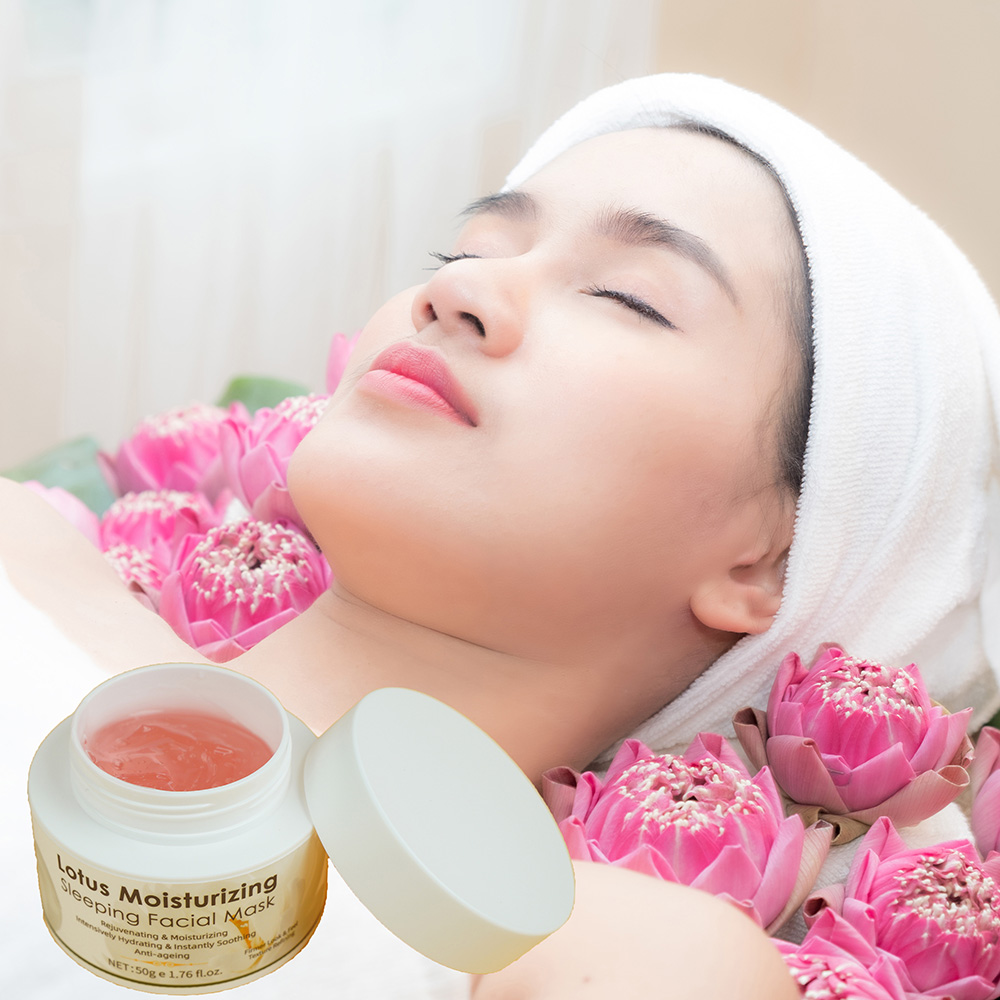
1. U.S. Food and Drug Administration. [GMP Guidelines/Inspection Checklist for Cosmetics]. Guidance covering controls for raw materials, production, laboratory testing, packaging, labeling, sanitation, and batch quality practices. [fda]
2. U.S. Food and Drug Administration. [Draft Guidance for Industry: Cosmetic Good Manufacturing Practices]. FDA guidance describing current thinking on cosmetic GMP practices. [fda]
3. American Academy of Dermatology. [How to Pick the Right Moisturizer for Your Skin]. Guidance noting ceramides and hyaluronic acid as beneficial ingredients to look for in moisturizers for dry skin. [aad]
4. Journal of Clinical and Aesthetic Dermatology. [Update on Moisturizers]. Professional overview of skin-barrier lipids, humectants, emollients, occlusives, ceramides, glycerin, and hyaluronic acid. [jcadonline]
5. Cleveland Clinic. [Do Face Masks Actually Work or Are They Just a Fad?]. Consumer health overview discussing hydrating face masks and hyaluronic acid for dry skin. [health.clevelandclinic]
Hot Tags: China, Global, OEM, private label, manufacturers, factory, suppliers, manufacturing company


