
Views: 267 Author: iHot Cosmetics Publish Time: 2026-07-07 Origin: Site


Content Menu
● What iHot Cosmetics brings first
● A manufacturer's product strategy
>> New data point for planning
● FAQ
>> 1. Which is better for beginners, eye cream or eye serum?
>> 2. Which product is easier to launch first for a new brand?
>> 3. When should a brand launch an eye serum first?
>> 4. What ingredients are most popular in eye care?
>> 5. Can a brand launch both eye cream and eye serum?
>> 6. Why does GMP manufacturing matter for eye care?
When brands ask "Eye Cream vs Eye Serum: Which Product Should Brands Launch First?" the best answer is usually not "which is better," but which one fits your target customer, price position, and hero-ingredient strategy first. For many new launches, an eye cream is the safer first SKU; for more ingredient-led or premium positioning, an eye serum can be the stronger opening statement.

The eye area is one of the fastest places to show dryness, fatigue, puffiness, and fine lines, so consumers expect visible results quickly. That is why this category can build trust fast, but it can also disappoint fast if the formula, texture, or claim is unclear. Recent dermatology literature continues to highlight ingredients such as caffeine, niacinamide, peptides, hyaluronic acid, retinoids, and vitamin C as common choices for periorbital concerns. [pmc.ncbi.nlm.nih]
For brands, the real question is not only formulation science. It is also retail clarity, repeat purchase potential, and how easy the product is to explain on a shelf, PDP, or short-form video. A product that is simple to understand often converts better than one that sounds advanced but confuses first-time buyers. [skincare]
At Guangzhou Aihuo Biotechnology Co., Ltd. (iHot Cosmetics), we help brands turn eye-care concepts into scalable OEM/ODM products with a GMP-oriented manufacturing mindset. Our facility is presented as a 70,000+ square meter factory with a 100,000-grade dust-free workshop, 15 fully automatic production lines, and more than 10 years of OEM/ODM experience serving 2,000+ brands. [cosmeticsinhot]
That matters because eye care is a precision category. Lightweight serums need stable delivery of actives, while richer creams need elegant feel, barrier support, and packaging compatibility. A manufacturer must balance texture, preservation, packaging, and claims readiness from the start, not after the formula is already locked. [iso]
The easiest way to frame the category is this: eye serums are usually lighter and more active-focused, while eye creams are usually richer and more moisture-focused. Skincare and dermatologist-led sources consistently describe eye serums as lighter textures that may absorb quickly and are often chosen for targeted actives, while eye creams tend to emphasize hydration, comfort, and barrier support. [charlottetilbury]
| Factor | Eye Cream | Eye Serum |
|---|---|---|
| Texture | Richer, more emollient | Lighter, thinner |
| Main appeal | Hydration, comfort, barrier support | Targeted actives, fast absorption |
| Best for | Dryness, first-time eye care users, mass market | Fine lines, puffiness, ingredient-savvy users |
| Positioning | Easier to explain, easier to adopt | More premium, more "treatment" focused |
| Purchase trigger | Daily comfort and moisture | Specific visible concern and efficacy story |
For a new brand, this difference is powerful. Eye cream often wins on broad appeal, while eye serum often wins on innovation and premium storytelling. [skincare]
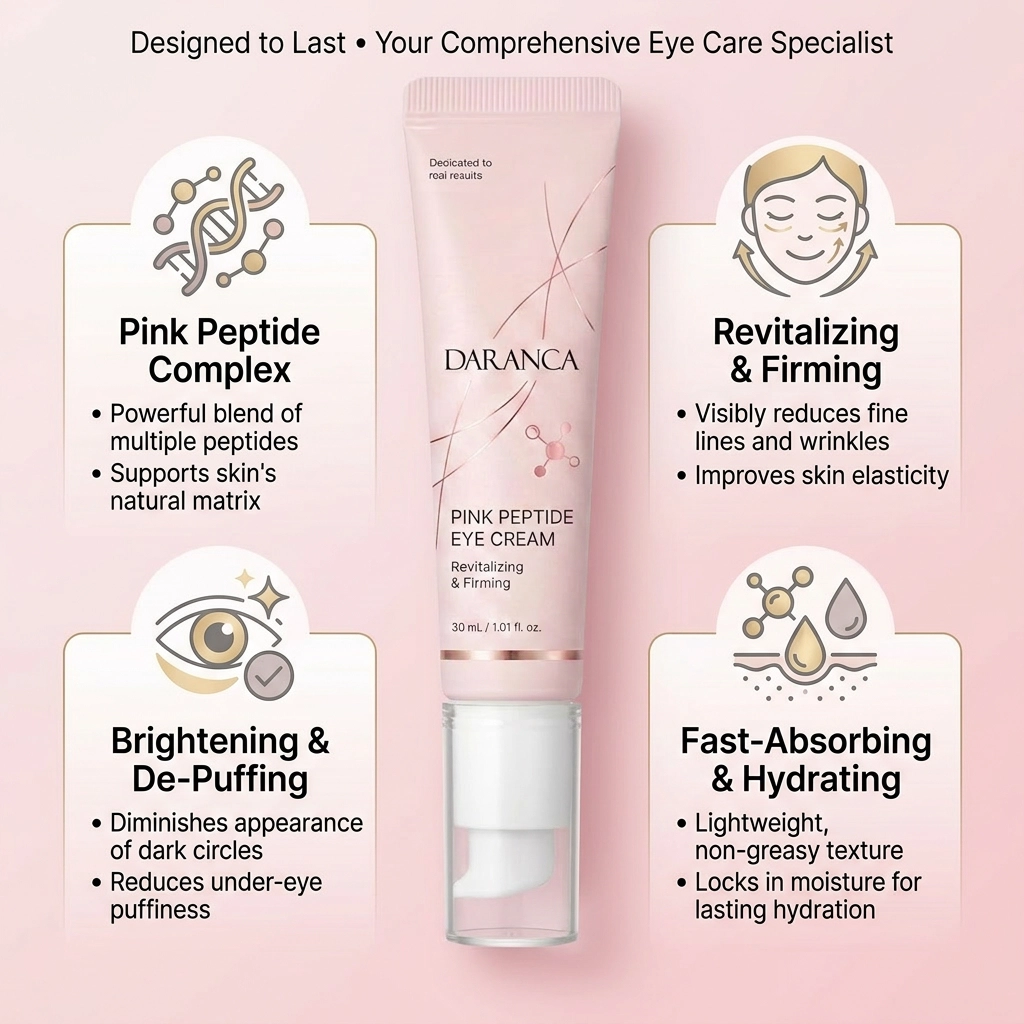
If your brand is building a first hero SKU, I usually recommend starting with eye cream when the audience is broad, the price point is mid-market, or the brand needs a lower-friction entry point. Eye cream is easier for consumers to understand, easier to position as a daily staple, and often easier to merchandise across retail channels. [pmc.ncbi.nlm.nih]
Choose eye serum first when the brand wants a more advanced, performance-led identity, especially if the story centers on caffeine for puffiness, peptides for firming, or a lightweight morning routine. Serums also work well when you want the product to feel more premium, more technical, or more differentiated from a crowded moisturizing eye-cream shelf. [conexiant]
Use this simple decision rule:
1. Launch eye cream first if your customer is new to eye care, prefers comfort, or shops for hydration and anti-fatigue benefits.
2. Launch eye serum first if your customer actively searches for actives, wants lightweight textures, or responds to "treatment" language.
3. Launch both only if you can clearly separate them by routine, texture, and claim.
This sequencing helps avoid cannibalization and makes your marketing message easier to understand. [conexiant]
From a production standpoint, eye cream is often the smarter first launch because it gives brands more room to build a stable, sensorial formula with broad consumer appeal. Eye serums require tighter control over viscosity, active load, pump compatibility, and stability expectations, especially if the formula aims to feel elegant and fast-absorbing. [iso]
At iHot Cosmetics, that is where OEM/ODM support becomes valuable. We can build a product around the brand's target claim, preferred finish, packaging style, and market channel, then align the formula with manufacturing practicality. In other words, the best SKU is not only the one consumers want; it is the one that can be made consistently at scale. [cosmeticsinhot]
The most persuasive ingredient stories are usually the most relevant ones. Dermatology reviews and skincare guidance repeatedly point to caffeine, peptides, hyaluronic acid, niacinamide, retinoids, and vitamin C as common options for eye-area concerns such as puffiness, wrinkles, dryness, and hyperpigmentation. [pmc.ncbi.nlm.nih]
A useful formula map is below:
- For puffiness: caffeine. [pmc.ncbi.nlm.nih]
- For dryness and comfort: hyaluronic acid and ceramides. [conexiant]
- For fine lines: peptides, retinoids, vitamin C, and hyaluronic acid. [conexiant]
- For dark circles and tone support: niacinamide, vitamin C, caffeine, and vitamin E. [pmc.ncbi.nlm.nih]
This is also where brand language matters. A product should not promise "everything" if the formula is really built for one or two primary concerns. Focused claims usually sound more credible and convert better. [conexiant]
Eye care is moving toward multi-benefit but easy-to-understand products. Consumers still want visible results, but they also want formulas that feel gentle enough for daily use and packaging that supports a clean routine. The strongest launches now combine one clear hero function with a short ingredient story and a sensorial texture that fits the promise. [today]
For example, a cream can be positioned as "daily barrier support and under-eye comfort," while a serum can be positioned as "lightweight de-puffing and brightening treatment." That kind of split helps brands avoid vague messaging and gives the buyer a reason to choose both later. [charlottetilbury]
Recent literature reviews also note a practical limitation: there are still relatively few direct clinical comparisons between specific eye-cream formulations and other treatments, which means brands should avoid overclaiming and should build credibility through ingredient logic, testing, and careful language. [pmc.ncbi.nlm.nih]
That insight is valuable for launch planning. It suggests the winning brand strategy is not "biggest claim." It is best-aligned claim plus dependable execution. [conexiant]
A strong launch process can be kept simple:
1. Define the primary concern: hydration, puffiness, fine lines, or dark circles.
2. Choose one hero texture: cream for comfort or serum for treatment positioning.
3. Select 2 to 4 supporting ingredients that fit the claim.
4. Match packaging to texture and usage habits.
5. Validate stability, compatibility, and consumer-use feel before scale-up.
This process reduces reformulation risk and makes your product story much easier to sell. It also creates a better foundation for future line extensions, such as a day serum plus a night cream. [iso]
As a China-based GMP-oriented manufacturing partner, iHot Cosmetics / Guangzhou Aihuo Biotechnology Co., Ltd. supports brands that need eye-care products built for real commercial performance. Our strength is not only production capacity, but also the ability to align formula logic, packaging decisions, and brand goals in one workflow. [cosmeticsinhot]
If your goal is to enter the market with a product that feels credible, marketable, and scalable, the safest path is usually to start with the SKU that your audience will understand fastest. In many cases, that is an eye cream; in more premium, ingredient-led cases, it is an eye serum. [skincare]
Eye cream is usually better for beginners because it is easier to understand, feels more moisturizing, and fits daily routine use. [charlottetilbury]
Eye cream is often easier to launch first because it has broader appeal and simpler consumer messaging. [skincare]
Launch eye serum first when your brand wants a more premium, active-focused product centered on puffiness, fine lines, or brightening. [pmc.ncbi.nlm.nih]
Common ingredients include caffeine, niacinamide, peptides, hyaluronic acid, retinoids, vitamin C, and ceramides. [pmc.ncbi.nlm.nih]
Yes, but only if the products have clearly different roles, such as day versus night, hydration versus treatment, or comfort versus correction. [charlottetilbury]
GMP-based manufacturing helps support consistent quality, production control, storage, and shipment processes for cosmetic products. [iso]
1. Kiehl's. "Eye Creams vs. Serums vs. Gels: What's The Difference?" [https://www.kiehls.com/skincare-advice/eye-creams-serums-and-gels.html] [kiehls]
2. Skincare.com. "The Difference Between Eye Creams and Eye Serums." [https://www.skincare.com/product-picks/eye-treatment/eye-serums-vs-eye-creams] [skincare]
3. Today. "Eye Serum Vs. Eye Cream, Explained by Dermatologists." [https://www.today.com/shop/eye-serum-vs-eye-cream-rcna171901] [today]
4. PMC / International Journal of Women's Dermatology. "A review of the efficacy of popular eye cream ingredients." [https://pmc.ncbi.nlm.nih.gov/articles/PMC11175953/] [pmc.ncbi.nlm.nih]
5. Conexiant. "Efficacy of Eye Cream Ingredients Reviewed." [https://conexiant.com/dermatology/articles/efficacy-of-eye-cream-ingredients-reviewed/] [conexiant]
6. ISO. "ISO 22716:2007 Cosmetics — Good Manufacturing Practices (GMP)." [https://www.iso.org/standard/36437.html] [iso]
7. European Commission. "Cosmetic products." [https://single-market-economy.ec.europa.eu/single-market/goods/european-standards/harmonised-standards/cosmetic-products_en] [single-market-economy.ec.europa]
8. iHot Cosmetics. "About Us." [https://www.cosmeticsinhot.com/aboutus.html] [cosmeticsinhot]
Hot Tags: China, Global, OEM, private label, manufacturers, factory, suppliers, manufacturing company


